
Introduction: Apartment-Friendly Mold Odor Troubleshooting in Bloomfield, NJ
Detecting a musty, earthy smell in an apartment can be frustrating—especially when you cannot open walls, alter building systems, or undertake major renovations. Fortunately, there is a clear, step-by-step approach to pinpoint, reduce, and eliminate mold odors even within the constraints of a rental. This guide is tailored to Bloomfield, New Jersey renters and property managers navigating shared walls, older plumbing, and variable ventilation. If you would like support from the outset, consider connecting with local mold odor removal professionals who can coordinate with building management and propose solutions suited to multifamily properties.
Below you will find a practical diagnostic checklist, apartment-safe cleaning methods, and communication tips for working with landlords or HOAs so the problem is addressed promptly and thoroughly.
Know Your Constraints and Rights
As a renter, your scope for demolition or system changes is limited, but you can—and should—document conditions, communicate clearly, and perform safe, reversible mitigation steps. Save photos of wet spots, stains, and damaged materials. Track dates, weather events, and any building leaks. If the odor intensifies after rain or HVAC operation, note it. Clear documentation helps property managers or maintenance teams address root causes quickly.
Step 1: Identify Likely Sources in Apartments
- Bathrooms: Long showers without adequate exhaust, leaking wax rings at toilets, deteriorated caulk, and damp bathmats.
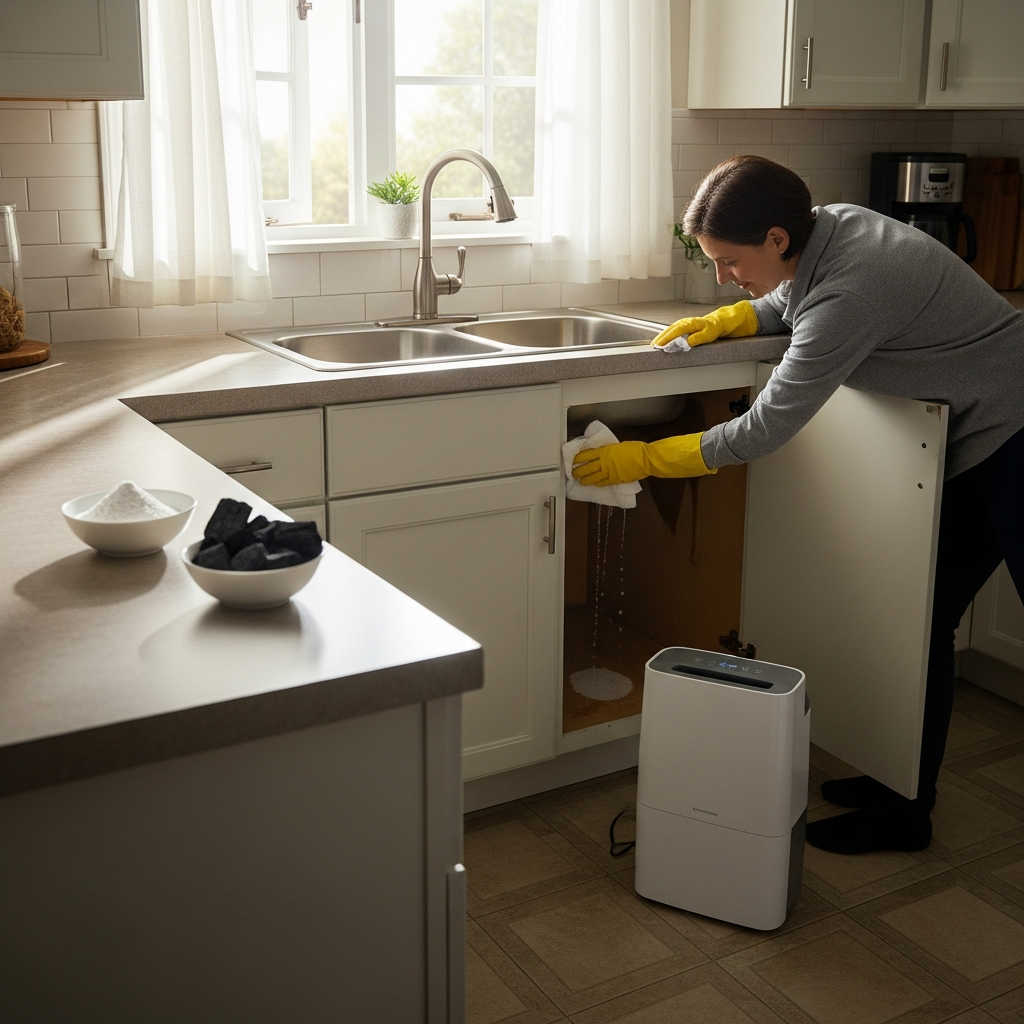
- Kitchens: Slow drips under sinks, faulty dishwasher or ice-maker lines, and trash areas.
- Laundry closets: Washer supply or drain leaks, lint and dust accumulation, and poor ventilation.
- Windows and exterior walls: Condensation on sashes, air leaks that pull humid air into wall cavities, or past window flashing failures.
- HVAC/packaged units: Dirty filters, clogged condensate drains, and leaky returns that draw air from damp basements or utility shafts.
Step 2: Drying and Ventilation You Can Control
- Run exhaust fans: Use bathroom and kitchen fans during and for 20–30 minutes after use. If fans are weak, request a maintenance check.
- Promote airflow: Open interior doors, pull furniture a few inches from exterior walls, and use portable fans to keep air moving across suspect areas.
- Dehumidify: In humid months, a portable dehumidifier can keep indoor RH between 30% and 50%—critical for odor control in apartments.
- Address spills and small leaks: Wipe up promptly; place trays beneath minor drips and notify management immediately with photos.
Step 3: Apartment-Safe Cleaning and Deodorizing
On non-porous surfaces, use a mild detergent with warm water. Lightly dampen, wipe, rinse, and dry thoroughly. For semi-porous trim or unfinished wood shelving, a gentle scrub followed by complete drying helps. Avoid abrasive chemicals unless approved by your building. Once dry, HEPA vacuum floors, baseboards, and supply/return grilles to capture fine particles that can carry odors.
Use odor absorbents like baking soda or activated charcoal in closets, under sinks, and near laundry areas. Replace them regularly until the smell declines. Launder towels and bathmats frequently and dry them fully; never leave damp fabrics in hampers.
Step 4: Work With Your Landlord or HOA
- Report quickly: Provide time-stamped photos and notes. Mention any weather events that coincide with the odor.
- Be specific: Identify the room, fixture, or condition you suspect. Ask for a moisture inspection behind suspect surfaces if the odor persists.
- Request HVAC checks: Dirty filters, clogged condensate drains, and leaky returns are common and fixable.
- Follow up: Keep a written record of requests and responses. Offer access times for maintenance visits to speed resolution.
Shared Systems in Multifamily Buildings
In apartments, odors may originate from neighboring units or common areas. A musty hallway, wet utility shaft, or roof leak several floors up can influence your air. If the smell is strongest near entry doors, shared walls, or mechanical closets, flag this in your report so building staff broaden the investigation. Centralized fixes—like sealing a utility chase or repairing a roof penetration—often deliver the breakthrough.
Targeted Troubleshooting Checklist
- Observe: Note when the odor is strongest—after showers, rainstorms, or HVAC cycles.
- Measure: Use a simple hygrometer to track indoor RH; aim for 30%–50%.
- Inspect: Check under sinks, around toilets, near windows, and at HVAC closets for dampness or staining.
- Dry: Ventilate, dehumidify, and use fans to promote quick drying.
- Clean: Detergent wash non-porous surfaces; HEPA vacuum after drying.
- Deodorize: Place baking soda or charcoal in affected rooms and replace regularly.
- Communicate: Document and report findings to management with photos and timing notes.
When DIY Isn’t Enough
If the odor returns repeatedly or worsens, the issue may be hidden—damp insulation, a slow leak within a wall, or moisture from a neighboring unit. Property management can bring in professionals using moisture meters, thermal imaging, and airflow diagnostics to locate and correct the root cause. That coordinated approach often ends weeks of trial-and-error and resolves persistent mold odor once and for all.
Prevention Habits for Renters
- Run exhaust fans consistently and request repairs if they are noisy or weak.
- Keep indoor RH below 50% with a portable dehumidifier during humid months.
- Report drips and condensation quickly, before damage spreads.
- Use breathable storage solutions; avoid overpacking closets that block airflow.
- Clean and dry shower curtains and bathmats regularly.
- Replace HVAC filters on the schedule recommended by management or sooner if dirty.
Frequently Asked Questions
Q: Can I use strong chemicals to kill the smell? A: Stick with mild detergent and water unless your landlord approves something stronger. Harsh chemicals can create harmful fumes and may not fix the underlying moisture.
Q: What if the odor is strongest near the door or hallway? A: The source may be in a common area or neighboring unit. Include this detail in your maintenance request to guide building-wide inspection.
Q: My bathroom fan is weak—what can I do? A: Report it for service and, meanwhile, open a window if possible, keep showers shorter, and run a portable fan to boost airflow.
Q: Will baking soda or charcoal alone solve the problem? A: They are helpful for residual smells but cannot overcome ongoing dampness. Drying and source repair are essential.
Q: Is it safe to use ozone machines in an apartment? A: Ozone can irritate lungs and damage materials. Focus on moisture control, cleaning, ventilation, and professional evaluation when needed.
Breathe Easy in Your Bloomfield Apartment
Even in multifamily settings with limited control over construction details, you can make a meaningful dent in musty odors by documenting issues, drying quickly, cleaning thoroughly, and coordinating with management for structural fixes. If you want a streamlined plan and prompt results, arrange for professional mold odor removal support and return your apartment to clean, neutral air.