
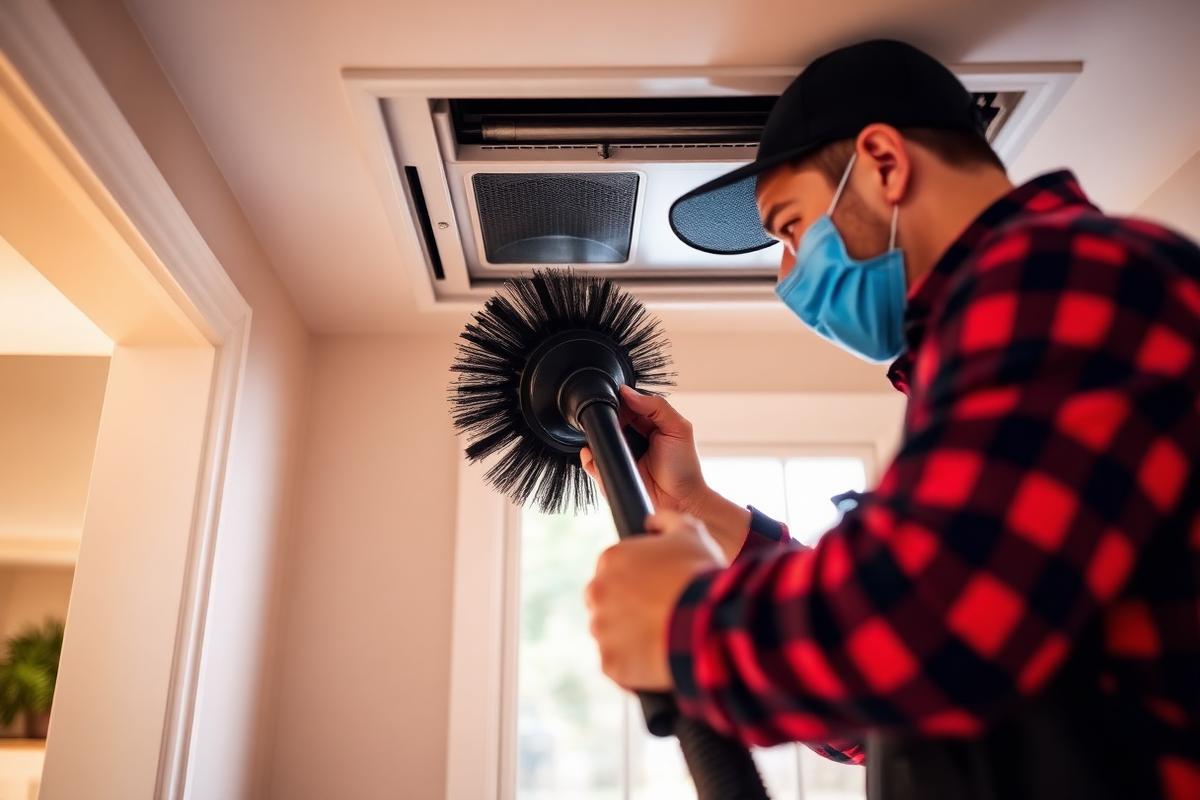
In most New Jersey homes the air handler and a good portion of the duct trunk live in the basement — the exact place summer flooding happens. If water reached them, the HVAC system becomes a distribution network for whatever was in that water.
When cleaning is genuinely necessary
If ductwork was submerged or partly submerged, if the air handler ran during or after a contaminated flood, or if there is visible microbial growth on the coil or in the supply plenum.
If the water never reached the system and the HVAC was shut off during the loss, cleaning may not be required at all — a good contractor will tell you that.
Flex duct versus metal
Rigid metal duct can be cleaned and sanitized. Insulated flex duct and duct board that absorbed contaminated water cannot be reliably decontaminated and should be replaced.
That distinction matters on the estimate — replacing a few runs of flex is often cheaper than repeatedly cleaning them.
Turn the system off during drying
Running the HVAC while a contaminated area is being dried pulls spores and odor into every room. Use standalone drying equipment and keep the system off until the affected area is cleared.
Replace the filter after the job — a fresh filter after drying is a small cost with a real effect on indoor air.
Key takeaways
- Submerged or contaminated flex duct is replaced, not cleaned
- Keep the HVAC off while a contaminated area is drying
- No water contact plus system off usually means no duct cleaning needed
Need air duct cleaning in Northeastern New Jersey?
NADCA-standard duct cleaning removes dust, dander and mold spores from your HVAC system — improving airflow and indoor air quality.
More from week 2: Storms & flooding
Emergency response, salvage decisions and insurance after summer storm water.