
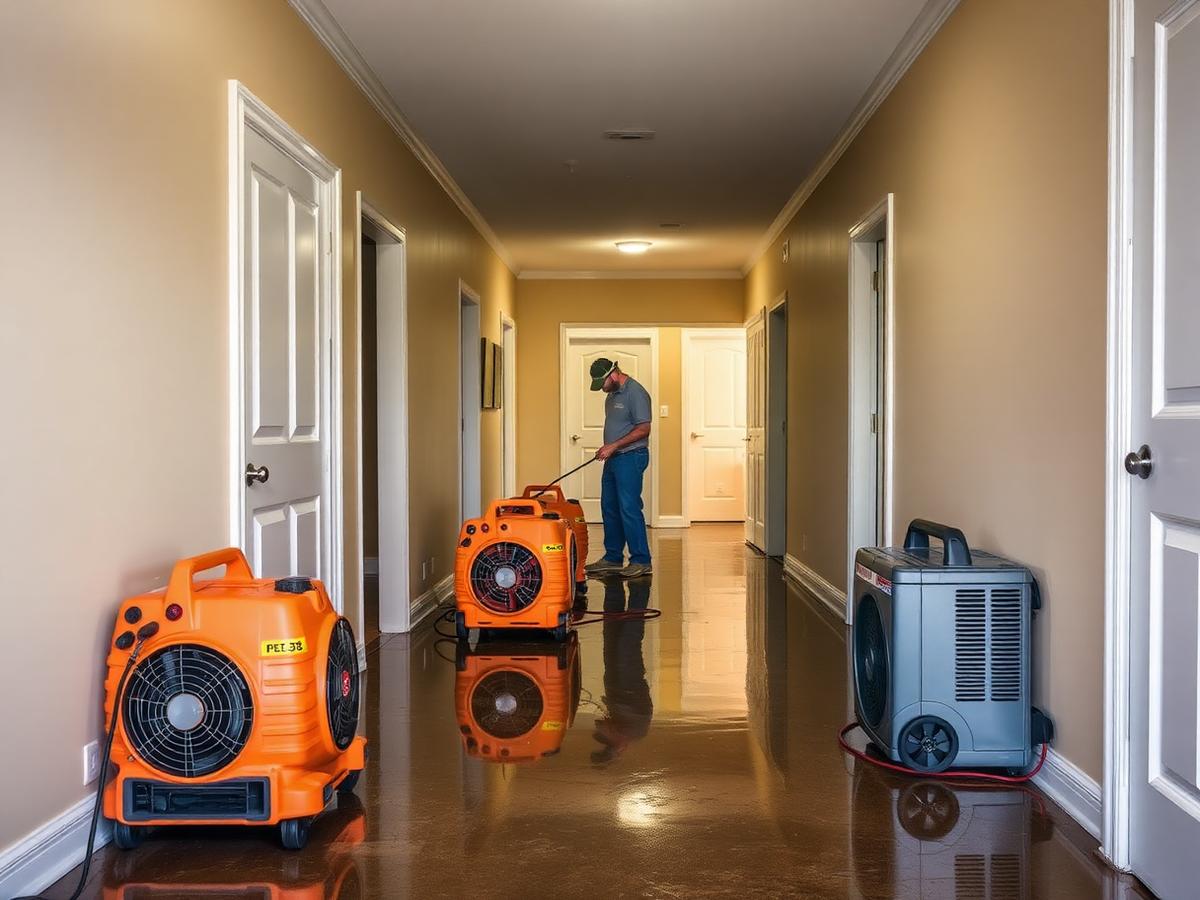
Northeastern New Jersey gets fast, heavy summer cells that overwhelm storm drains in minutes. What you do in the first six hours has more impact on the final cost than anything that happens later.
Safety before anything else
Do not enter standing water in a basement with live electrical panels, outlets or submerged appliances until power to that area is off. If the panel itself is in the water, the utility or an electrician kills it, not you.
Assume storm water is contaminated. Boots and gloves, and keep kids and pets out of the area.
Document while you wait
Photograph and video everything before anything moves — water lines on walls, affected contents, the whole room from multiple angles. Adjusters pay claims on documentation.
Keep receipts for anything you buy during the emergency; those costs are frequently reimbursable.
What our crew does on arrival
Extract standing water, remove unsalvageable porous material, apply antimicrobial where contamination is present, and set a calculated number of air movers and dehumidifiers based on the room's cubic volume and class of loss.
We take moisture readings daily and adjust equipment until every material hits dry standard, then provide the full log for your claim.
Key takeaways
- Power off before entering standing water — no exceptions
- Photograph everything before you move a single item
- Drying is calculated to the room volume, not guessed
Need water damage restoration in Northeastern New Jersey?
From burst pipes to storm damage — we extract standing water, dry the structure, and restore your home fast to prevent secondary damage.
More from week 2: Storms & flooding
Emergency response, salvage decisions and insurance after summer storm water.