
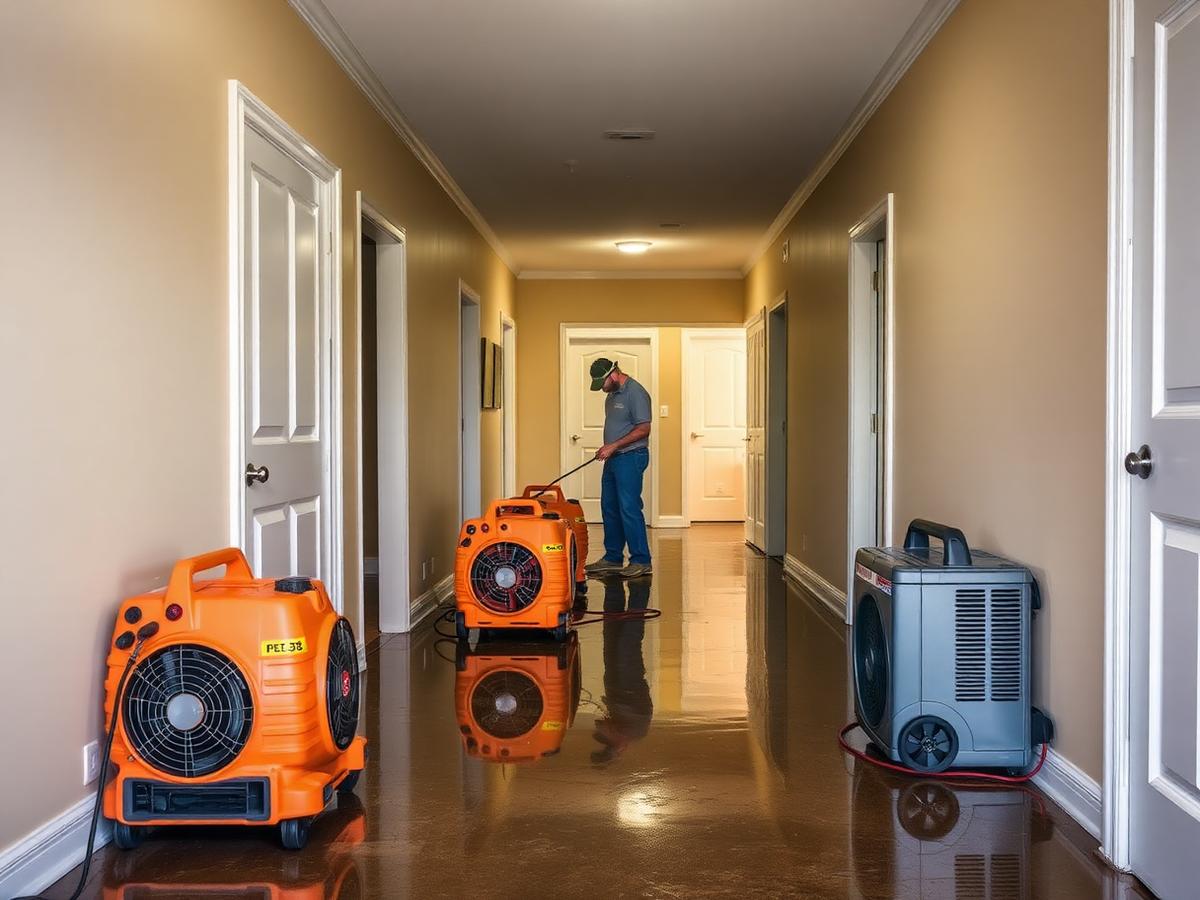
A leak that never floods anything can still degrade the air in your home. Continuous evaporation from a wet cavity raises local humidity and sustains microbial growth you will smell long before you see.
Signs of a slow leak
An unexplained rise in the water bill, a warm or damp spot on a floor, paint that blisters in one small area, a baseboard that is soft at the bottom edge, or a smell that appears only in one room.
Check under every sink monthly and look at the supply lines to toilets and the washing machine — braided lines have a service life.
Finding it without demolition
Thermal imaging plus moisture meters typically localizes a leak to a small area before anything is opened. That keeps the repair small and the rebuild cheap.
Once located, drying the cavity is a separate step from fixing the plumbing — and skipping it is why some repaired leaks still smell months later.
Dry it properly, then verify
Targeted drying with airflow into the cavity, a dehumidifier controlling the room, and daily readings until materials meet dry standard.
Verify with a meter, not by touch. Framing can feel dry and still be well above safe moisture content.
Key takeaways
- Continuous evaporation from a small leak degrades air quality
- Thermal imaging localizes leaks before any demolition
- Fixing the plumbing is not the same as drying the cavity
Need water damage restoration in Northeastern New Jersey?
From burst pipes to storm damage — we extract standing water, dry the structure, and restore your home fast to prevent secondary damage.
More from week 3: Indoor air quality
Allergens, filtration and the systems that decide what you breathe at home.
- Air Duct CleaningDuct Cleaning, Filters and Summer Allergies: What Actually Helps
- Restoration ServicesBuilding Back Healthier: Restoration Choices That Improve Air Quality
- Area Rug CleaningThe Dusting Step: Why Rug Cleaning Removes More Allergen Than You Think
- Upholstery CleaningDust Mites and Pet Dander: Why Upholstery Cleaning Matters for Allergies