
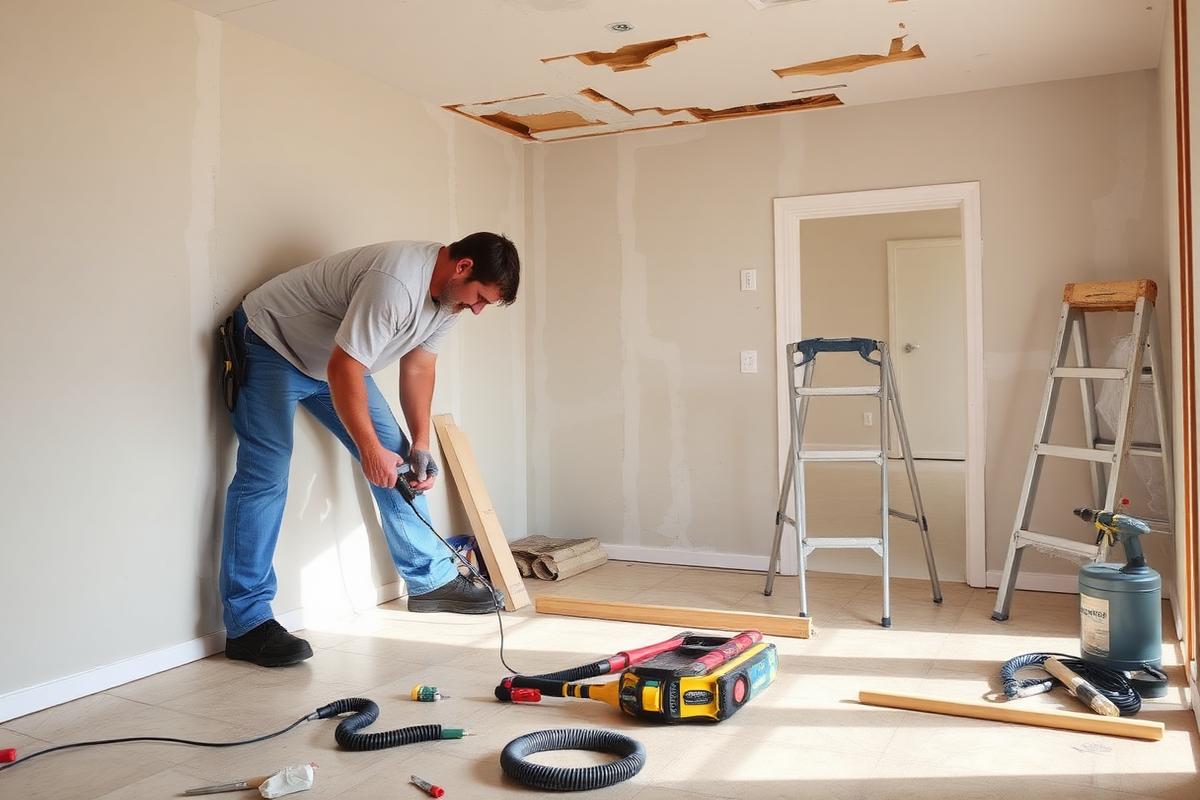
If a wall is already open, putting back exactly what failed is a missed opportunity. A handful of material choices make the next event smaller and the air in between better.
Materials worth the upgrade
Paperless or mold-resistant gypsum in basements and baths, closed-cell foam or mineral wool instead of paper-faced fiberglass at rim joists, and luxury vinyl plank or tile instead of carpet below grade.
Low-VOC paints and adhesives matter more than people think in a freshly sealed room.
Details that prevent the next loss
Hold finished materials slightly off the slab, add an access panel where a valve or cleanout is buried, install leak sensors near the water heater, washer and air handler, and confirm the condensate line has a proper trap and slope.
Regrade and extend downspouts while you are at it — most basement water starts outside.
Ventilate what you rebuild
Bath fans should exhaust outside, not into the attic, and be sized for the room. A basement rebuild should include a plan for continuous dehumidification with a condensate pump so nobody has to empty a bucket.
These are small line items during a rebuild and expensive retrofits later.
Key takeaways
- Paperless gypsum and mineral wool resist the next moisture event
- Leak sensors and access panels are cheap during an open-wall rebuild
- Plan basement dehumidification into the restoration scope
Need restoration services in Northeastern New Jersey?
We handle the rebuild after the mitigation — drywall, flooring, paint and finishing so you get one team from emergency to done.
More from week 3: Indoor air quality
Allergens, filtration and the systems that decide what you breathe at home.
- Air Duct CleaningDuct Cleaning, Filters and Summer Allergies: What Actually Helps
- Area Rug CleaningThe Dusting Step: Why Rug Cleaning Removes More Allergen Than You Think
- Upholstery CleaningDust Mites and Pet Dander: Why Upholstery Cleaning Matters for Allergies
- Water Damage RestorationHidden Water Leaks Are an Air Quality Problem, Not Just a Plumbing One