A typical residential wool rug can hold well over a pound of dry soil per square yard before it looks dirty. Almost all of that is below the surface, where a vacuum cannot reach.
Dusting comes before water
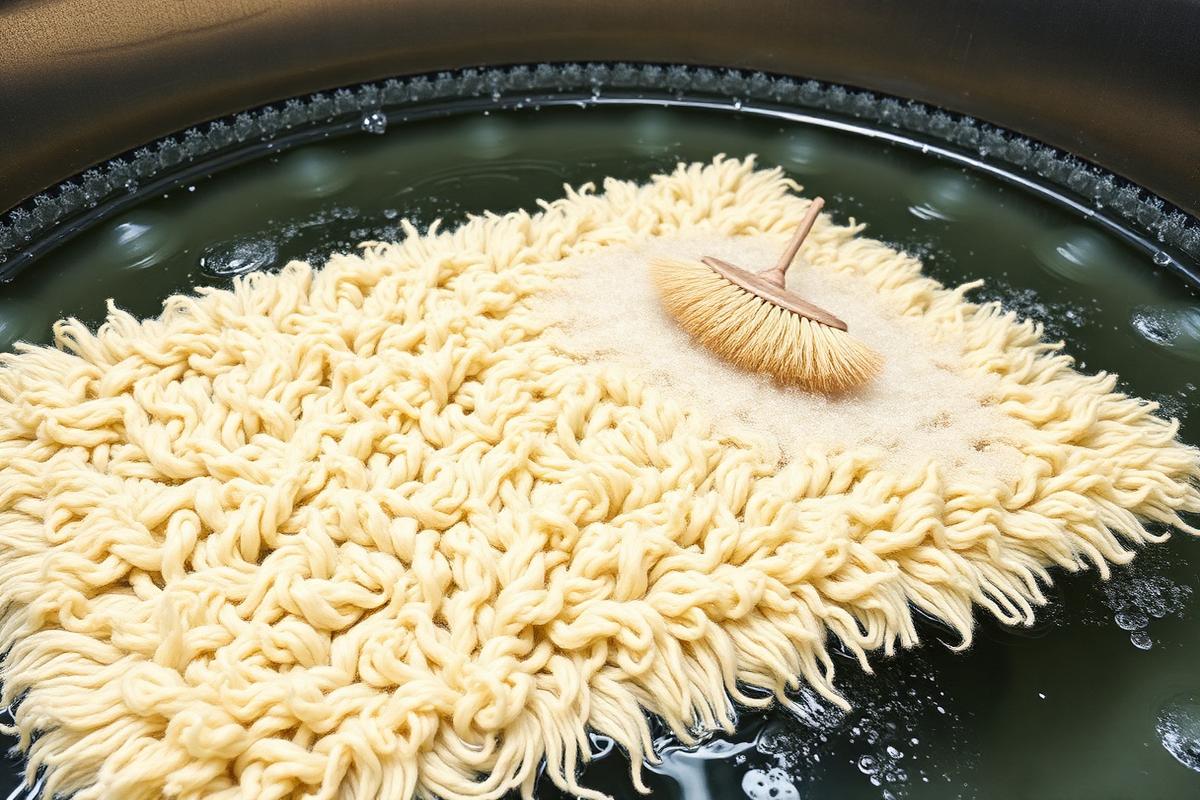
In-plant dusting uses vibration and compressed air to drive dry particulate out of the foundation. Introducing water before that step turns dry soil into mud that binds to the fibers.
This is the single biggest difference between plant washing and any on-site method, and it is where most of the allergen removal happens.
Washing and rinsing to zero residue
After dusting, the rug is washed with a pH-appropriate solution and rinsed until the water runs clear. Residual detergent left in a rug attracts soil and can irritate sensitive occupants.
Controlled drying with airflow finishes the job without setting creases or fading color.
Do not forget the pad and the floor
The floor under a rug should be cleaned while the rug is out, and a quality felt-and-rubber pad both protects the rug and reduces the particulate ground into it.
Rotate rugs seasonally so wear and sun exposure stay even.
Key takeaways
- Dry dusting before washing removes the bulk of trapped allergen
- Rinse until clear — detergent residue causes rapid resoiling
- Clean the floor and upgrade the pad while the rug is out
Need area rug cleaning in Northeastern New Jersey?
Hand-inspected, pH-balanced washing for wool, silk and synthetic area rugs. Free pickup and delivery across our service area.
More from week 3: Indoor air quality
Allergens, filtration and the systems that decide what you breathe at home.
- Air Duct CleaningDuct Cleaning, Filters and Summer Allergies: What Actually Helps
- Restoration ServicesBuilding Back Healthier: Restoration Choices That Improve Air Quality
- Upholstery CleaningDust Mites and Pet Dander: Why Upholstery Cleaning Matters for Allergies
- Water Damage RestorationHidden Water Leaks Are an Air Quality Problem, Not Just a Plumbing One