Most of the mold we remediate in July was never visible to the homeowner. It lived behind baseboards, under vinyl plank, or inside a wall cavity fed by a slow supply-line weep — which is why inspection comes before remediation.
The three tools that do most of the work
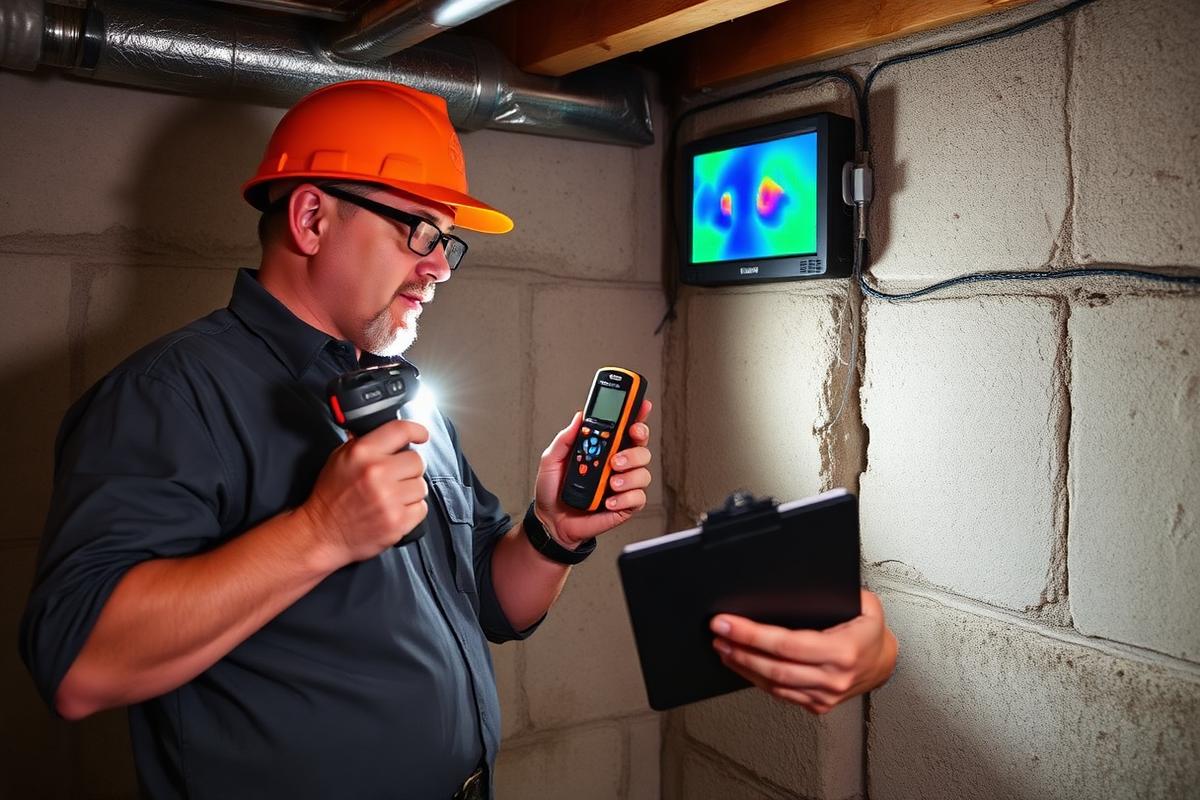
A pin and pinless moisture meter establishes whether a material is genuinely wet or just cool. A thermal camera finds temperature differentials that point to evaporation. Air and surface sampling confirms species and spore counts when a written report is needed for a landlord, buyer or insurer.
Together they let us map the wet area instead of guessing at it — which means less demolition later.
Where we look in a humid month
Basement rim joists, the back of finished basement walls, under kitchen and bath cabinets, around AC condensate lines and air handlers, and behind any furniture sitting flat against an exterior wall.
Condensate drip pans are the classic July culprit: a clogged line quietly wets subfloor and drywall for weeks while the AC keeps running.
What you should get in writing
A legitimate inspection ends with a report: photos, moisture readings by location, suspected source, and a scoped action plan with clear boundaries. If you are told only that you 'have mold' and handed a price, ask for the readings.
The report also protects you later — it is the documentation an insurer or a future buyer will ask for.
Key takeaways
- Most summer mold is hidden behind finishes, not visible on them
- AC condensate lines and drip pans are a leading July moisture source
- Always leave an inspection with photos, readings and a written scope
Need mold inspection in Northeastern New Jersey?
Certified inspectors identify hidden moisture, active growth, and the root cause. You get a clear written report and a scoped action plan.
More from week 1: Summer humidity
How a humid New Jersey July drives moisture, mold and odor inside the home.
- Air Duct CleaningAir Duct Cleaning During AC Season: Better Airflow, Cleaner Air
- Restoration ServicesMitigation vs. Restoration: What Happens After the Water Is Gone
- Area Rug CleaningSummer Rug Care: Protecting Wool and Silk Through a Humid July
- Upholstery CleaningSunscreen, Sweat and Summer Sofas: Upholstery Cleaning That Works