The most common post-storm call is also the most reasonable question: the water is gone and the floor looks dry, so is there anything left to worry about? Usually, yes — the floor dries first and everything else dries last.
Dry surface, wet assembly
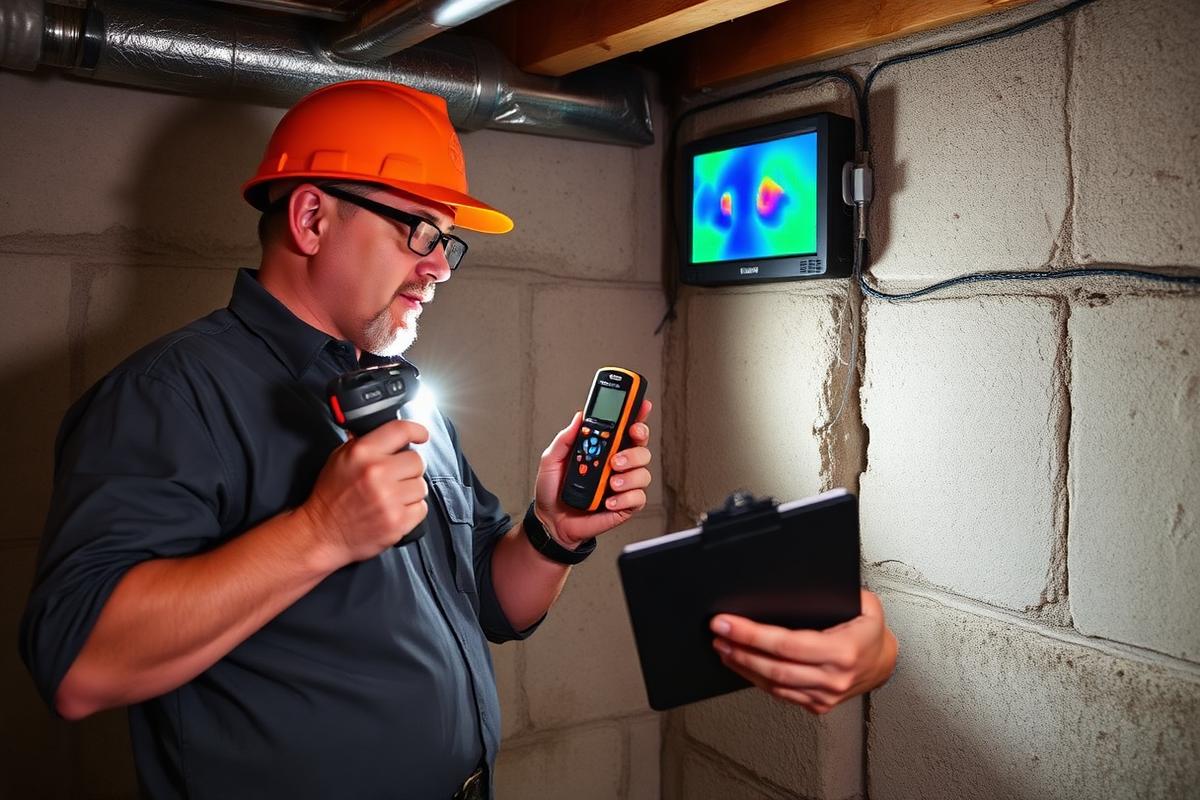
Concrete slabs surface-dry quickly while the base of drywall, the bottom plate, and carpet pad hold moisture for weeks. A pinless meter across the bottom twelve inches of wall tells the real story in about ten minutes.
Thermal imaging then maps how far the water wicked laterally — often several feet past the visible line.
The four spots that matter after a storm
The bottom plate behind finished walls, under stair stringers, the back side of any built-in cabinetry, and anywhere stored cardboard sat directly on the slab.
Cardboard and stored fabric are the fastest-colonizing materials in a basement — if boxes were wet, they go, no exceptions.
When sampling is worth the cost
Air sampling makes sense when someone in the household has respiratory symptoms, when there is a dispute with a landlord or insurer, or as post-remediation verification. It is not needed to confirm mold you can already see.
Every inspection should end with a written report you can hand to an adjuster.
Key takeaways
- Slabs dry first; wall plates and pad stay wet for weeks
- Wet cardboard and stored fabric should be discarded, not dried
- Sampling is for verification and disputes, not for confirming visible mold
Need mold inspection in Northeastern New Jersey?
Certified inspectors identify hidden moisture, active growth, and the root cause. You get a clear written report and a scoped action plan.
More from week 2: Storms & flooding
Emergency response, salvage decisions and insurance after summer storm water.