Understanding the Full Mold Removal Process in Bloomfield, NJ
From the first whiff of a musty odor to the final verification that materials are dry and clean, a successful remediation follows a disciplined sequence. In Bloomfield, New Jersey, where humid summers and frequent rain test older basements and bathrooms, each step in the process matters because moisture control is the hinge upon which results swing. This comprehensive explanation demystifies the phases professionals follow and adapts them to what homeowners need to know. Whether you plan to hire an expert or simply want to be an informed client, this walkthrough illuminates how mold removal aligns safety, building science, and practicality to restore a healthy indoor environment.
Every project begins with health and safety in mind. Protecting occupants, workers, and clean areas of the home comes before tools ever touch a wall. Then comes source identification, because cleaning mold without fixing water problems is like drying off in the rain. Only after those two pillars are secure do containment, cleaning, and verification produce lasting results. Keep this hierarchy in mind as you review the process: safety, source, containment, cleaning, drying, and confirmation.
Phase 1: Initial Assessment and Moisture Discovery
Assessment is more than a glance at stains. It is a structured review of how water enters and moves through your home. In Bloomfield, common pathways include negative yard grading that channels water toward foundations, downspouts that discharge at the base of walls, unvented bathrooms, and plumbing leaks in kitchens or laundry rooms. An assessor surveys for visible growth, water damage, and building details that concentrate moisture, such as thermal bridges that cause condensation or poorly sealed penetrations around pipes and wires.
Simple instruments sharpen the picture: moisture meters reveal wet drywall or framing, hygrometers track relative humidity, and infrared cameras can highlight cool, damp zones behind finishes. The output of a good assessment is a clear hypothesis about the source, the extent of affected materials, and the priorities for control. In multi-unit buildings, the assessor also considers shared systems and coordinates with building management so that one apartment’s solution does not become another’s problem.
Phase 2: Safety Planning and Occupant Protection
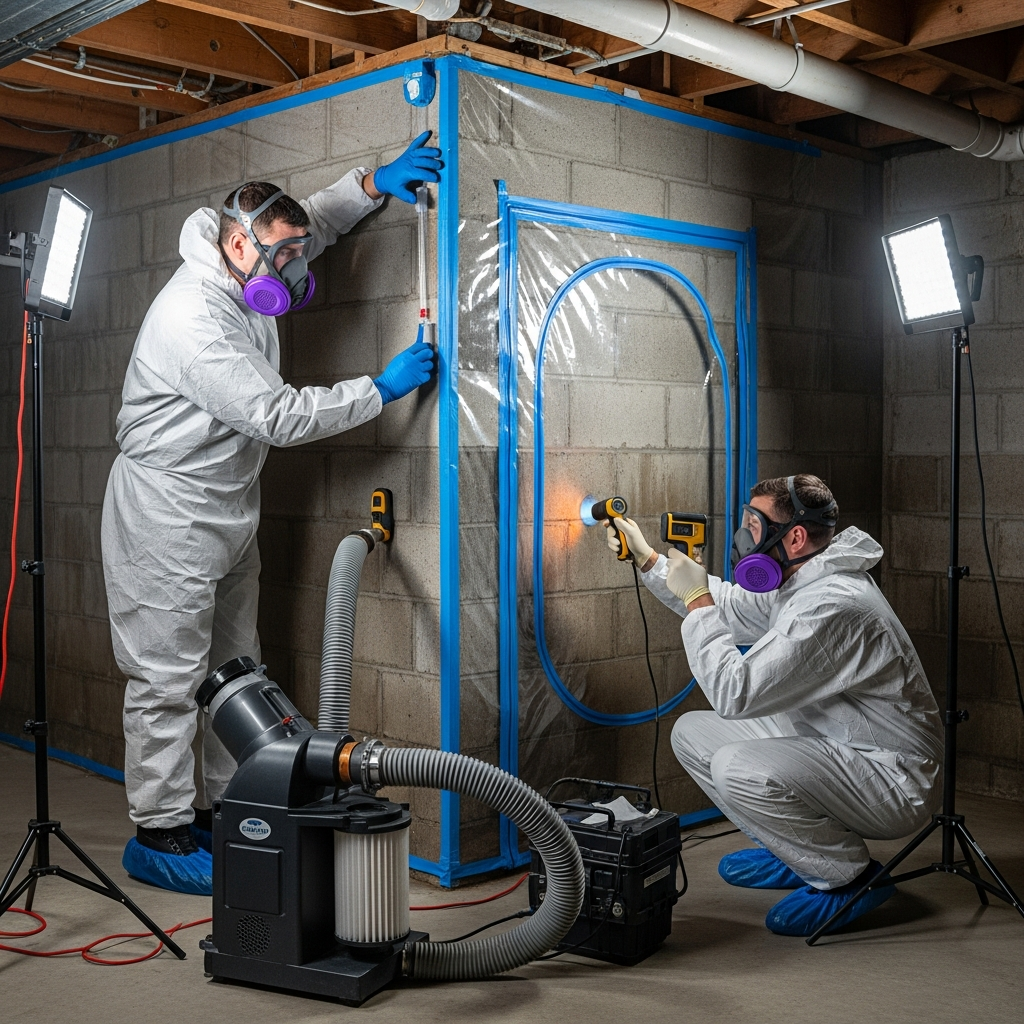
Before anyone touches the work area, the plan addresses household health. Sensitive occupants—young children, seniors, and those with asthma—are relocated or protected, and the HVAC serving the affected zone is turned off to avoid distributing spores. Workers equip themselves with non-vented goggles, gloves, and appropriate respirators, scaling up to P100 filtration and disposable coveralls as the scope grows. A staging area for tools, clean cloths, and trash bags is prepared outside the containment so that traffic is minimized and clean areas stay clean.
Communication is part of safety too. The team explains the sequence of work, identifies which doors and pathways will be used, and outlines how dust and debris will be controlled. Clear expectations reduce surprises and help families plan their day. In Bloomfield’s close-knit neighborhoods, courteous scheduling and tidy pathways also maintain good relations with neighbors in multifamily dwellings.
Phase 3: Containment and Negative Air
Containment prevents cross-contamination. Plastic barriers are erected from floor to ceiling around the work zone, with sealed seams and a controlled entry. For larger projects, negative air machines fitted with HEPA filters exhaust air to the exterior, establishing a pressure gradient that pulls air into the work zone and prevents particles from escaping to clean areas. Supply and return registers in the zone are sealed, and the HVAC is isolated as needed. This infrastructure may look elaborate, but it protects the rest of the home and speeds final cleaning because dust and spores are captured rather than dispersed.
Clean-to-dirty workflow also matters. Tools remain inside containment, and workers follow a sequence that minimizes re-contamination—ceiling to floor, cleaner to dirtier zones. HEPA air scrubbers and vacuums operate continuously during dust-producing tasks so disturbed particles are captured at the source. This disciplined environment is foundational to the success of subsequent cleaning and removal.
Phase 4: Selective Removal and Surface Cleaning
With containment in place, the team tackles materials based on porosity and condition. Non-porous and many semi-porous surfaces—tile, sealed concrete, painted metal, and some finished woods—are first HEPA vacuumed to remove loose fragments and dust. They are then washed with a detergent solution, agitated with non-shedding pads, rinsed, and dried. For porous materials such as wet drywall, carpet pad, and ceiling tiles that stayed damp more than 24–48 hours, removal and disposal is the standard of care because contamination can extend into pores that cleaning cannot reliably reach.
Structural lumber and subfloor that remain stained after cleaning may be lightly sanded if dry and sound, followed by local HEPA capture and damp wiping. The objective is cleanliness you can see, smell, and verify—not just the appearance of improvement. During the midpoint of this phase, a professional will pause to confirm that humidity and surface moisture are trending down. If conditions are not improving, they will revisit source control before proceeding with more demolition or cleaning, and they may expand the scope of mold removal to adjacent areas if evidence warrants it.
Phase 5: Drying, Dehumidification, and Verification
Drying locks in success. Dehumidifiers sized to the space run continuously with windows and doors closed to the outdoors. Air movers promote even evaporation from cleaned surfaces, but they are used judiciously so they do not blast uncleaned growth into the air. Moisture readings are taken periodically and compared to known dry baselines or to adjacent unaffected materials. Verification is both quantitative and qualitative: low, steady humidity; dry material readings; neutral odors; and a visibly dust-free environment point to success.
Only after verification do rebuilding steps proceed. This may include replacing drywall, reinstalling baseboards, and repainting. Smart choices in materials and detailing—like mold-resistant drywall in bathrooms, proper backer boards behind tile, and high-quality sealants—make the repair more durable in Bloomfield’s climate.
Phase 6: Root-Cause Prevention Tailored to Bloomfield
Long-term success is about prevention. Outside, downspouts should discharge several feet from the foundation, gutters must be clear, and grading should slope away from the home. In winter, adequate attic insulation and ventilation prevent ice dams that force water under shingles. Indoors, use bathroom exhaust fans during and after showers, run range hoods while boiling or dishwashing, insulate cold water lines to prevent condensation, and keep dehumidifiers ready for humid spells. If window condensation appears regularly, reduce indoor humidity and improve air circulation before the cool season sets in.
Maintenance routines help too. Inspect under sinks for slow drips, check wax rings at toilets if you notice odors or staining, and clean lint and ducts for dryers to prevent humidity spikes. A few minutes of monthly vigilance can save many hours of remediation later.
Homeowner Role vs. Professional Role
Homeowners can handle small, localized issues when the moisture source is straightforward and the affected area is modest. The professional’s role expands as complexity increases: multi-room contamination, sewage or floodwater involvement, hidden interstitial moisture, and medically sensitive households call for advanced tools and protocols. Experienced teams build robust containment, use HEPA-filtered negative air machines, and document cleanup and drying so you have confidence that the fix will last. A good contractor also helps you prevent recurrence by diagnosing the building science drivers behind the initial problem.
Frequently Asked Questions About the Process
Q: Do I need testing before remediation? A: If you see visible growth and know the moisture source, many projects proceed directly to remediation and moisture control. Testing can be useful when the source is unclear, when there is a dispute, or when post-remediation documentation is needed for sensitive occupants or property transactions.
Q: Can I stay in my home during the work? A: Often yes, especially if containment isolates the work zone and sensitive occupants can avoid it. For larger projects or where odors and dust would be disruptive, temporary relocation during the dustiest phases may be advisable.
Q: Is bleach the best cleaner? A: Not necessarily. Detergent cleaning, HEPA vacuuming, and thorough drying are primary. If disinfectants are used, they must be applied according to label directions with proper ventilation and PPE, and they are not a substitute for removing contaminated porous materials.
Q: How long does drying usually take? A: It depends on the extent of wet materials, airflow, temperature, and dehumidification capacity. In many Bloomfield projects, three to seven days of active drying is common, but verification—not the calendar—determines when to rebuild.
Q: Will painting over the area solve the problem? A: Only if the substrate is clean and dry. Paint can hide residual staining but will fail if moisture persists. Address the source, remove unsalvageable materials, clean, and verify dryness before repainting.
Q: What about the HVAC system? A: If the affected area is served by forced air, protect the system by sealing nearby registers during work and changing filters afterward. In some cases, professional duct cleaning is appropriate, particularly if contamination spread during the initial water event.
From Assessment to Assurance
When you understand the sequence—safety, source, containment, cleaning, drying, and verification—you can make clear decisions and evaluate the quality of work being done in your home. If you prefer experienced hands to handle assessment, containment, surface cleaning, drying, and final verification—and to offer durable prevention strategies tailored to Bloomfield’s climate—schedule expert mold removal and move forward with confidence that your indoor environment is clean, dry, and resilient.