
Welcome, Bloomfield Homeowners: A Practical Guide to Safer Mold Cleanup
Mold problems are aggravating, but with a plan grounded in safety and moisture science, you can restore a healthy indoor environment without unnecessary stress. Bloomfield, New Jersey homes face familiar risk factors: humid summers, occasional basement seepage after thunderstorms, and aging bathrooms with limited ventilation. This guide translates industry best practices into homeowner-friendly steps, from recognizing early warning signs to post-cleanup prevention. To start strong, remember that professional-grade mold removal is as much about stopping moisture and controlling dust as it is about cleaning stains. The following sections walk you through a methodical approach that suits typical Bloomfield houses, condos, and garden apartments.
Before you begin, evaluate size and risk. If the affected area is very large, if contamination involves sewage or long-term flooding, or if anyone in your home is medically vulnerable, bring in a qualified professional. For small to moderate patches tied to minor leaks or intermittent humidity, a careful homeowner can often handle the job. Either way, start by identifying the source of moisture, setting up basic containment, and gathering the proper protective equipment so you are never improvising in the middle of a messy task.
Spot the Signs Early: Odor, Staining, and Condensation
Early detection lowers risk and reduces effort. Musty odors concentrate in corners, behind furniture, and inside cabinets beneath sinks. Discoloration on drywall, patchy growth on painted masonry, or cupped hardwood near a dishwasher can all signal excess moisture. In basements typical of Bloomfield’s older homes, look for white powdery efflorescence along foundation walls, a clue that water vapor is moving through masonry and dissolving salts as it goes. Watch for recurring condensation on windows or cold pipes; those droplets are a roadmap to humidity problems that can feed microbial growth if left unaddressed.
Keep a simple log of conditions—relative humidity, dehumidifier settings, and visible changes—over a few days. If the problem stabilizes only when your dehumidifier runs constantly, you likely need improvements in drainage, air sealing, or insulation. If a leak is suspected, shut off fixtures as needed and plan repairs before you touch the affected finishes. A thoughtful pause upfront prevents doing the same job twice.
Personal Safety: Gear Up, Plan, and Protect Your Household
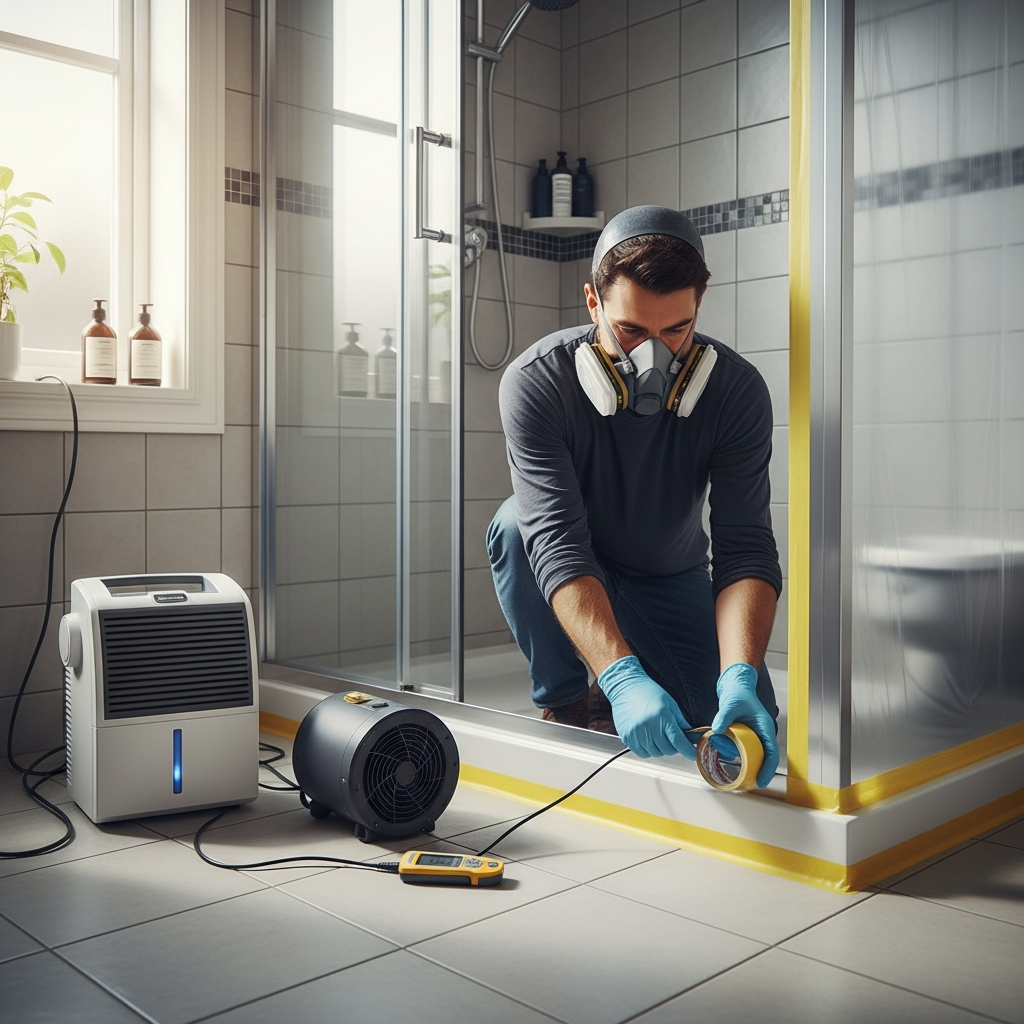
Your safety plan should include non-vented goggles, gloves, and at least an N95 respirator properly fitted over clean-shaven skin. For dustier work, step up to a half-face respirator with P100 filters and disposable coveralls. Keep children, pets, and vulnerable occupants clear of the work zone, and shut down any HVAC serving the affected area to avoid distributing spores through ducts. Create a staging zone just outside the workspace with trash bags, clean cloths, and a place to remove protective gear without tracking dust into the rest of your home. Thoughtful preparation keeps the project manageable and reduces the time you’ll spend cleaning afterward.
Containment is your next layer of protection. Even a closed door with taped edges can make a measurable difference for small jobs. For larger areas, set up a plastic barrier to the ceiling and consider negative air by venting a fan to the exterior through a window, away from neighbors and walkways. Keep your supplies and vacuum inside the containment so you are not crossing thresholds repeatedly. When you do exit, wipe tools and bag waste immediately, then wash hands and face before re-entering living spaces.
Smart Assessment: Trace the Water, Not Just the Stain
Mold remediation fails when the water problem persists. In Bloomfield, the culprits often include misdirected downspouts, clogged gutters, shower leaks, laundry overflows, and unvented bathroom fans that dump moist air into attics. Investigate outward as well as inward: ensure the soil around your foundation slopes away from the house, extend downspouts, and clear gutters before stormy stretches. Indoors, test fixtures for slow drips, inspect caulking around tubs and showers, and check around water heaters and washing machines for corrosion or dampness. If you can safely access the attic, confirm bath fans terminate outdoors and that soffit and ridge vents are unobstructed.
Measure progress as you intervene. A basic moisture meter can tell you whether drywall or framing is drying over days, not just hours. Even if you do not own a meter, you can monitor humidity with an inexpensive hygrometer and note odors and surface feel. It is essential to wait until you have stopped the wetting event and the trend is toward dryness before tackling cleaning and removal.
Hands-On Mold Removal: A Homeowner’s Workflow
Start with HEPA vacuuming to capture loose material and spores on floors, trim, and ledges. This reduces what becomes airborne when you clean. Next, use a detergent solution to wash non-porous and many semi-porous surfaces—tile, sealed concrete, and painted wood. Work in sections from top to bottom, changing cloths frequently. Rinse with clean water and dry immediately. For porous materials like wet drywall, insulation, and carpet pad that have been damp for more than a day or two, removal and disposal are typically the best path. Cut drywall to sound material beyond the visible damage, bag debris in heavy-duty bags, and seal them before moving through the house.
On structural wood where staining remains after cleaning, gentle sanding may be appropriate if the material is dry and sound. Always couple sanding with local HEPA vacuuming to minimize dust, and wipe surfaces with a damp cloth after sanding. Keep the area under negative air if possible. During the mid-point of your project, reassess: is humidity under control, and does the area look and smell clean? If progress stalls, a professional evaluation can help you adjust scope or escalate to full-scale mold removal.
Drying, Dehumidification, and Rebuilding
Drying is not an afterthought—it is the conclusion that locks in your results. Use a properly sized dehumidifier for basements or larger rooms and ensure closed windows and doors so you are not fighting outdoor humidity. Air movement helps, but direct fans only at clean, damp surfaces after loose debris is captured. Monitor humidity for several days, aiming for a steady state below 50 percent. Before you close walls, verify that framing and sheathing are dry. When you do rebuild, consider moisture-smart choices: mold-resistant drywall for bathrooms, tile backer boards in wet areas, high-quality caulking around tubs and sinks, and a slight gap between the bottom of drywall and slab or floor to prevent wicking.
Everyday Prevention in Bloomfield Homes
Prevention in Bloomfield starts outside. Ensure downspouts discharge several feet away from the foundation and add extensions if needed. Maintain positive grade and keep mulch and soil from creeping above the sill line. In winter, prevent ice dams by improving attic insulation and ventilation so roof temperatures remain uniform. Inside, run bathroom exhaust fans for 20–30 minutes after showers, use kitchen range hoods while boiling or dishwashing, and don’t ignore window condensation—it is a signal to lower indoor humidity. Insulate cold pipes to prevent sweating, and leave basement furniture a few inches from exterior walls to allow air circulation.
Household Scenarios: Kids, Pets, and Sensitive Occupants
Many Bloomfield households include young children, seniors, or pets that spend time near floors and corners where dust settles. For these families, plan extra vigilance. Schedule work when sensitive occupants can be away, keep pathways clean with damp dusting outside the containment area, and change HVAC filters after work is complete. Consider a short-term HEPA air purifier run near sleeping areas following remediation, recognizing that purifiers supplement but do not replace source control and cleaning. Communication helps too—explain the process to family members so they know why doors are sealed and fans are running.
When DIY Isn’t Enough
If your inspection suggests widespread contamination, hidden wall cavities are wet, or sewage or stormwater was involved, DIY approaches may not be sufficient. Complex assemblies like flat roofs, tiled showers with failed waterproofing, or interstitial condensation in exterior walls often demand professional tools and experience. A reputable firm will build robust containment, deploy negative air machines, use HEPA-filtered vacuums, and document drying and cleanliness. They will also help you address the building science causes so your fix lasts beyond the next rainy week.
Frequently Asked Questions from Bloomfield Homeowners
Q: Can I clean mold on painted drywall without replacing it? A: If the paint film is intact and growth is superficial, careful HEPA vacuuming and detergent cleaning may suffice. If the paper face is compromised or staining persists, replacement of the affected section is a safer long-term solution.
Q: Do I need to test the air after cleanup? A: Post-remediation air testing is not always necessary for homeowner-level projects if you have visible cleanliness, neutral odors, dry materials, and stable humidity. If you need documentation or have sensitive occupants, consult a qualified professional to design appropriate verification.
Q: Will running the furnace fan help dry things out? A: It can help mix air, but it may also spread spores if the affected area is not contained or if filters are dirty. Prioritize targeted drying with dehumidifiers and localized fans after cleaning, then change HVAC filters before returning the system to normal operation.
Q: What cleaners should I avoid? A: Avoid mixing chemicals and avoid harsh agents in unventilated spaces. Detergent cleaning, HEPA vacuuming, and thorough drying are the mainstays. Always follow product labels and wear appropriate PPE.
Q: How fast do I need to act after a leak? A: Within 24–48 hours is ideal to prevent microbial growth. Immediate water control, removal of soaked porous materials, and active drying greatly improve outcomes and minimize demolition.
Q: Will new windows stop condensation? A: High-performance windows help, but indoor humidity and air circulation are equally important. Use bath and kitchen ventilation, run a dehumidifier in summer, and maintain consistent indoor temperatures to reduce cold surfaces where moisture condenses.
Confident Next Steps for Your Home
A strong plan, careful containment, thoughtful cleaning, and disciplined drying will take you most of the way to a healthy, mold-free home. When the job is larger than you want to tackle, or when you would rather have seasoned hands set up containment, verify moisture, and complete thorough mold removal, schedule an assessment with a trusted Bloomfield specialist and move forward with confidence.