
Fast Relief From Stubborn Mold Odors in Bloomfield, New Jersey
The musty, earthy smell of mold can take over a Bloomfield home quickly after a storm, a plumbing leak, or simply a stretch of humid weather. If you need fast relief, you are not alone—many homes in Essex County wrestle with lingering moisture in basements, bathrooms, and crawl spaces. This guide shows you how to act decisively within minutes, hours, and days to clear the air and keep it that way. If time is tight and you want expert help right away, consider professional mold odor removal so your family can breathe easier while you address the source.
Speed matters because odor-causing compounds from molds and damp materials become stronger the longer moisture lingers. By combining ventilation, drying, targeted cleaning, and source control, you can drive down odors quickly and prevent them from coming back.
Why Mold Odors Linger in Bloomfield Homes
Bloomfield’s climate brings muggy summers, occasional heavy rains, and freeze-thaw cycles that stress building materials. Older homes may have porous foundations, unsealed crawl spaces, or insufficient ventilation that encourage condensation and slow drying. Mold odors typically come from microbial volatile organic compounds (MVOCs) released as mold grows on damp drywall, wood, carpet backing, cardboard boxes, and dust. Even if you cannot see obvious growth, a persistent musty smell signals moisture problems hiding in construction cavities, under flooring, or behind baseboards.
Odors also persist when soft furnishings, insulation, and subflooring absorb dampness and trap smells. Air currents can pull those odors through basements, utility rooms, and HVAC systems into living spaces. The good news: a structured, step-by-step approach can reduce odors fast while you plan long-term fixes.
Safety First: Simple Precautions Before You Begin
Before diving into cleanup, take a moment for safety. If the odor is intense and you also notice dizziness, headaches, or irritation, increase ventilation and step outside for a few breaths. Wear disposable gloves and, if you have it, a respirator or at least a snug-fitting mask while cleaning. Never mix cleaning chemicals, and keep children and pets away from wet areas and cleaning products. If there is standing water near outlets or electrical equipment, shut off power to the affected circuit and avoid contact until it is safe.
Your First Hour: The Fast-Action Playbook
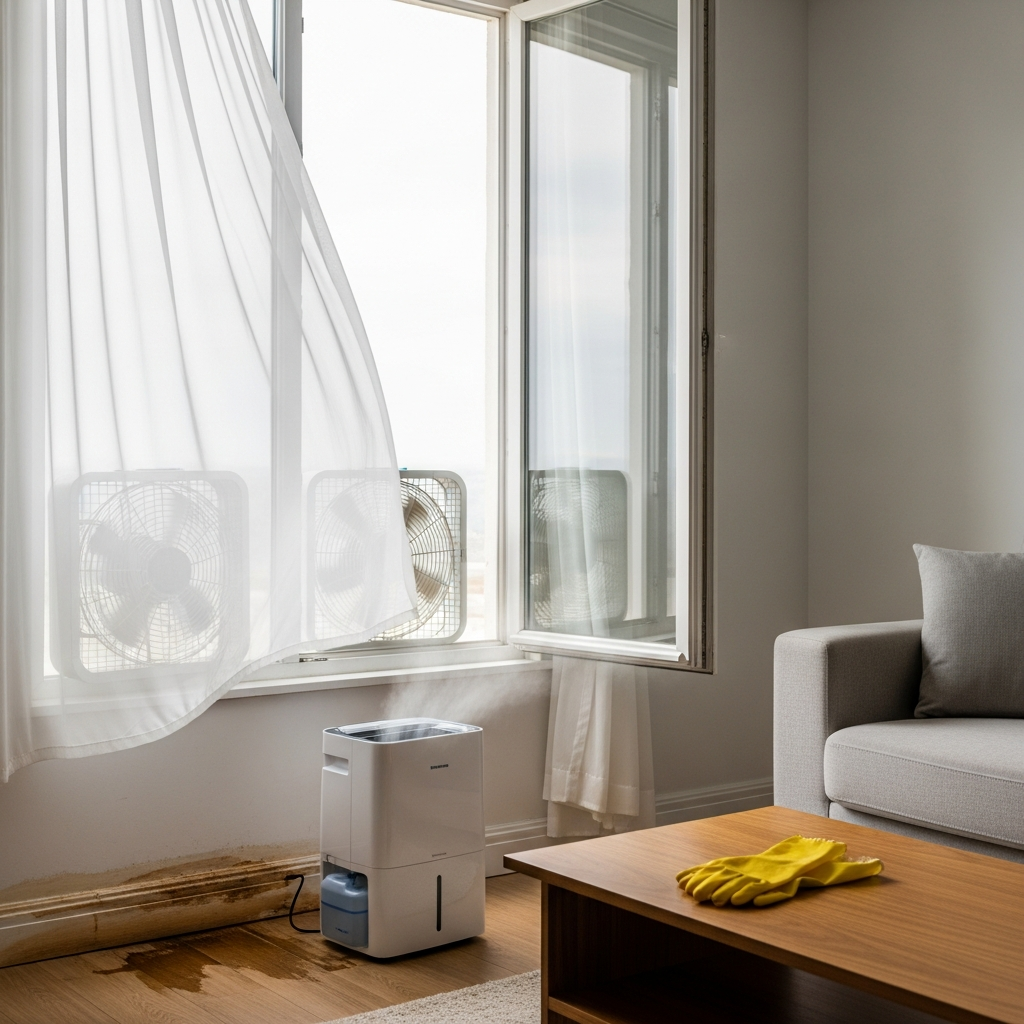
- Open windows on opposite sides of the home, weather permitting, to create cross-ventilation. Use box fans facing outward to exhaust musty air.
- Shut off HVAC in the affected area if it spreads odor through vents. Replace the air filter if it is damp or musty.
- Identify moisture sources: check under sinks, around toilets, behind washing machines, and near water heaters. Look for dripping pipes, wet baseboards, or discolored drywall.
- Blot and extract visible water with towels or a wet/dry vacuum. Place absorbent towels under slow drips and put a bucket beneath active leaks.
- Remove easily portable items that hold odors: damp rugs, cardboard boxes, and fabric items. Move them to a dry, sunny spot or a garage with airflow.
The First 24 Hours: Drying Drives Odor Down
Odor reduction begins with moisture control. Drying aggressively for the first day is essential. Combine the following tactics and maintain them steadily:
- Dehumidify to keep indoor relative humidity between 30% and 50%. Empty the reservoir frequently or connect a drain hose.
- Use heat and airflow together. Warm air holds more moisture; fans push that moisture toward the dehumidifier or open windows.
- Create space. Pull furniture and storage from walls by several inches to improve air circulation.
- Lift edges of carpeting carefully and aim fans underneath to dry the pad and subfloor if they are damp.
- Check hidden zones: under sinks, inside vanity bases, behind washer/dryer, and around foundation walls.
Targeted Cleaning to Neutralize Odor Sources
Once surfaces are dry to the touch, you can work on neutralizing the compounds that carry the musty smell. Begin with the least aggressive method and scale up as needed:
- Vacuum thoroughly using a HEPA-equipped vacuum to remove dust and spores from floors, baseboards, and window sills.
- Hard surfaces such as tile, sealed concrete, and vinyl can be washed with a gentle detergent solution. Rinse and dry completely.
- For porous materials like unfinished wood framing or subfloors showing light discoloration, wipe with a mild cleaner and allow extended drying with direct airflow.
- Textiles that can be laundered should be washed in hot water when appropriate for the fabric, then thoroughly dried.
- Dispose of water-damaged cardboard, paper, or ceiling tiles that retain odor even after drying.
Common Bloomfield Hotspots and How to Handle Them
In Bloomfield homes, several areas repeatedly cause musty odors due to chronic dampness or hidden condensation. Tackle these spaces methodically:
- Basements: Inspect foundation wall joints, window wells, and the slab perimeter for dampness. Clean floor drains, confirm sump pumps operate correctly, and seal gaps where humid air infiltrates.
- Bathrooms: Check caulk lines around tubs and showers, the base of toilets, and vent fans. Replace worn caulk, run the fan during and after showers, and leave the door open to speed drying.
- Kitchens and Laundry Rooms: Inspect supply hoses, drain lines, and under-sink cabinets. Ensure dryers are vented outdoors and ducts are lint-free.
- Crawl Spaces: Look for exposed soil, lacking vapor barriers, or open vents that invite humid summer air. Consider encapsulation and consistent dehumidification.
- Attics: Address roof leaks, insufficient soffit and ridge ventilation, and bathroom fans that terminate into the attic instead of outdoors.
Airflow, Filtration, and Odor Capture
Beyond drying and cleaning, air management helps strip odor molecules from your living spaces. HEPA filtration in a portable air cleaner can reduce airborne particles. Activated carbon filters can adsorb some odor-causing compounds. Continue to ventilate when weather allows, and keep interior doors open to reduce stagnant zones. If your HVAC is odor-free, run the fan periodically to circulate air through a clean filter. Consider upgrading to a high-quality pleated filter rated for fine particulates, and replace it more frequently after a moisture incident.
What to Avoid When You Need Results Fast
- Do not mask odors with heavy fragrances; they only blend with mustiness and may cause irritation.
- Avoid oversaturating porous materials with water or harsh chemicals; this worsens moisture problems.
- Do not paint or seal over damp, musty surfaces. Trapped moisture can lift coatings and perpetuate odor.
- Avoid ozone generators in occupied spaces; they can irritate lungs and damage sensitive materials.
- Do not ignore small leaks; even minor drips can maintain persistent smells.
If the Odor Persists: Track the Moisture Source
When smell returns after your initial cleanup, the source remains. Use your senses: sniff along baseboards, around sink traps, at basement corners, and near windows after a rain. Press gently on suspect drywall; softness signals hidden dampness. Examine the backside of removeable baseboards or check under area rugs. If you own a moisture meter, compare readings across dry and suspect areas. Elevated humidity in one room often points to a hidden leak, blocked vent, or infiltration of damp outdoor air.
Middle-Mile Support: When to Call Professionals
Some odor problems involve complex building assemblies, persistent groundwater intrusion, or widespread dampness in carpets and subfloors. In those cases, partnering with local experts can save time and stress. Experienced pros use meters, infrared cameras, advanced drying equipment, and odor counteractants formulated for building materials. They can also help you distinguish between residual odor and ongoing growth. If you want a quick path to clean, fresh-smelling rooms without guesswork, look into professional mold odor removal that integrates moisture control, deep cleaning, and source repair.
Long-Term Prevention for Bloomfield Homes
Lasting relief depends on keeping indoor humidity in check and eliminating pathways for water entry. Maintain gutters and downspouts so roof water flows at least several feet from the foundation. Grade soil to slope away from the house. Seal gaps in rim joists and foundation penetrations to limit humid air infiltration. In basements, use a high-capacity dehumidifier through humid months and keep storage off floors and away from exterior walls. In bathrooms, run vent fans for at least 20 minutes after showers. Insulate cold-water pipes to reduce condensation, and upgrade weatherstripping on doors and windows to reduce humid air leaks.
Step-by-Step Quick Reference
- Ventilate and exhaust musty air immediately.
- Stop leaks and extract water fast.
- Dehumidify aggressively to 30%–50% RH.
- Clean hard surfaces; dry porous materials thoroughly.
- Remove odor-holding clutter and textiles until fully dry.
- Filter and recirculate air with clean HVAC filters.
- Track and fix the moisture source to prevent recurrence.
Frequently Asked Questions
Q: How fast can I expect the odor to fade once I start drying? A: Many homes report noticeable improvement within 24 to 48 hours of focused ventilation, dehumidification, and surface cleaning. Full elimination depends on removing the moisture source and treating any porous materials that absorbed odor.
Q: Do I have to remove drywall if I smell mustiness? A: Not always. If drywall is dry and undamaged, targeted cleaning and continued drying may suffice. However, if the drywall is soft, discolored, or smells stronger near seams and baseboards, partial removal to expose and dry the cavity may be necessary.
Q: Is bleach recommended for odor? A: On nonporous surfaces, diluted bleach can disinfect, but it is not ideal for odor on porous materials and can add moisture. Detergent cleaning followed by thorough drying is often more effective for odor reduction.
Q: Can I rely on air fresheners or candles? A: These mask smells temporarily but do not solve the underlying moisture issue. They can also introduce additional irritants into indoor air.
Q: What humidity level should I maintain indoors? A: Aim for 30% to 50% relative humidity. Use a reliable hygrometer and adjust dehumidification, ventilation, or heating to stay within range.
Q: How do I know if the smell is from the HVAC? A: If odor is strongest at supply vents, check the filter, inspect the return plenum for debris, and ensure condensate drains properly. If in doubt, have a professional examine the system.
Q: Will opening windows in winter help? A: Briefly airing out on a dry, cold day can help because cold air has low absolute humidity. Balance heat loss with the benefit of fresh air and close windows once humidity drops.
Q: Are houseplants helpful for odor removal? A: Plants are not a substitute for drying and cleaning. While some may absorb trace compounds, effective odor control requires moisture management and source removal.
Ready for Fresh Air in Your Home
If you want a faster, surer path to relief—especially after a leak, storm, or recurring basement humidity—schedule professional support that pairs moisture control with deep cleaning. Local specialists understand Bloomfield’s housing stock and seasonal swings, and they bring equipment that accelerates drying and tackles entrenched odors. When you are ready to reclaim clean, healthy indoor air, connect with trusted experts in mold odor removal and get your home back to fresh, comfortable living.