Commercial properties in Bloomfield, New Jersey—from retail storefronts and restaurants to offices, warehouses, and multifamily complexes—face unique challenges when mold appears. Beyond indoor air quality concerns, mold can threaten business continuity, inventory, tenant satisfaction, and your organization’s reputation. A swift, organized response grounded in safety and building science safeguards employees and customers and helps operations resume smoothly. This guide outlines how professional commercial remediation works, what to expect at each stage, and why coordinating with experts in mold removal can minimize disruption and protect your asset over the long term.
Unlike residential projects that can sometimes pause routines, commercial environments demand strategic scheduling, after-hours work when feasible, clear signage, and careful communication with stakeholders. Property managers, facility directors, and business owners must balance speed, thoroughness, and compliance with applicable building and safety standards.
Immediate Priorities When Mold Is Discovered
When visible growth or musty odors are identified, designate a decision-maker and assemble key information quickly. Note affected rooms, recent leaks, roof or plumbing work, known humidity problems, and any tenant or employee reports of symptoms or odors. Your initial goals are to prevent spread, stabilize the environment, and set realistic expectations for timelines and access restrictions while the issue is contained and resolved.
- Isolate the affected area, limit traffic, and post clear signage.
- Turn off or isolate HVAC in the zone and cover returns and supply vents.
- Protect inventory and sensitive equipment from dust and moisture.
- Contact remediation professionals for an assessment and scope.
Assessment and Planning for Commercial Spaces
Commercial buildings often contain diverse materials and complex systems: drop ceilings, shared chases, large rooftop HVAC units, and mixed construction from renovations over time. An effective assessment includes moisture mapping, inspection above ceilings and behind wall cavities, and a review of drainage, downspouts, and roof penetrations. Warehouses may require lift access to inspect high racking and roof deck undersides; restaurants and healthcare suites demand additional sanitation controls.
Planning includes defining containment boundaries, airflow strategies, egress routes for debris removal, and a phasing schedule that considers peak business hours. Communication plans ensure tenants and staff know which areas are off-limits and when noise, odors from cleaning agents, or short-term closures may occur.
Containment, PPE, and Negative Air
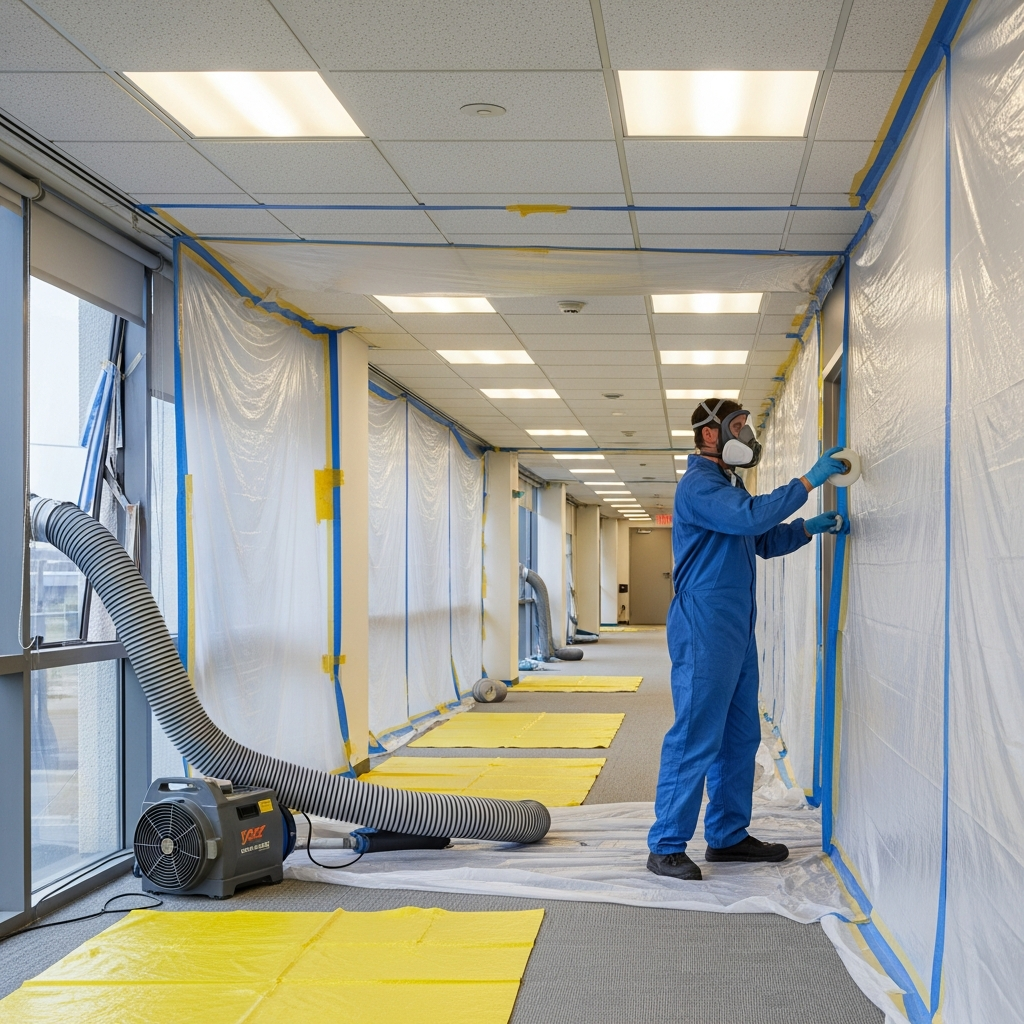
Containment is critical in commercial settings where foot traffic and HVAC systems can spread contamination. Poly barriers with zipper doors, sticky mats, and designated entry points keep work zones secure. Negative air machines with HEPA filtration maintain pressure differentials so air flows into, not out of, the containment. Crews wear PPE—respirators, goggles, gloves, and coveralls—and follow decontamination procedures to prevent tracking debris through common areas and elevators.
Selective Removal and Cleaning Protocols
Porous materials like ceiling tiles, insulation, and carpet are typically removed when contaminated. Semi-porous wood framing can be cleaned, scrubbed, HEPA vacuumed, and dried. Non-porous surfaces—including metal framing, concrete, and tile—are cleaned with detergent-based solutions and wiped thoroughly. After demolition and cleaning, technicians continue HEPA vacuuming and damp wiping to capture residual particles before clearance checks or re-occupancy.
- Remove and bag contaminated porous materials with minimal disturbance.
- HEPA vacuum all surfaces in containment, including overhead elements.
- Scrub and wipe with appropriate cleaners, changing cloths frequently.
- Dry materials thoroughly using dehumidifiers and targeted airflow.
- Repeat HEPA vacuuming and wipe-down before verification.
Protecting Operations and Reputation
Well-managed projects balance thoroughness with business continuity. This can include night work or weekend schedules, temporary partitions to keep sales floors open, and phased remediation by zone so that large facilities maintain core operations. Clear updates to tenants, staff, and customers reinforce trust and show that health and safety are top priorities while the building is restored.
Moisture Control and Building Envelope Improvements
In Bloomfield’s climate, moisture problems commonly stem from roof penetrations, clogged gutters, poor grading, and HVAC imbalances that drive condensation on cold ducts or window frames. Commercial properties should routinely inspect roofs, seal flashing, maintain rooftop drains, and confirm downspouts discharge away from the foundation. Balancing ventilation and indoor humidity protects both employee comfort and building finishes. Persistent trouble spots may require building envelope consulting to isolate thermal bridges or infiltration points that cause condensation.
Coordination With Property Management and Tenants
In multi-tenant spaces, collaboration is essential. Establish a communication protocol that handles access times, noise windows, and inventory protection. Provide advanced notice for temporary closures or elevator use for debris removal. Security and cleaning staff should be briefed on containment rules and PPE policies to maintain safety and prevent accidental breaches of the work area.
Documentation and Post-Remediation Verification
Maintain a complete record of findings, photos, moisture readings, and the sequence of remediation steps. Many organizations keep a building health log to track leaks, roof repairs, and humidity trends. After remediation, visual confirmation, acceptable moisture readings, and normal odors support re-occupancy decisions. Independent verification can provide additional assurance for stakeholders and regulatory requirements that may apply to specialized facilities.
Training and Prevention Culture
Creating a prevention culture reduces future incidents. Train maintenance teams to identify early signs: stained ceiling tiles, bubbling paint, or musty odors near janitorial closets. Empower team members to report water events immediately. Update cleaning protocols to promptly dry spills and condensation-prone zones, such as near loading docks or walk-in coolers. Small changes in daily habits can prevent larger disruptions later.
Bloomfield-Specific Considerations
- Seasonal humidity and heavy rains can stress roof drainage; schedule inspections before and after storm seasons.
- Older masonry buildings may need repointing or interior vapor control strategies to curb moisture migration.
- Shared HVAC trunks in mixed-use buildings warrant careful sealing during work to prevent spreading contaminants.
- Neighborhood construction can vibrate dust loose from ceilings; maintain filters and housekeeping to control settling particles.
Frequently Asked Questions
Q: Can we keep parts of our business open during remediation? A: Often yes. With proper containment, negative air, and scheduling, many facilities operate in unaffected zones while work proceeds elsewhere.
Q: Do we need testing before starting? A: A detailed visual and moisture assessment is the foundation. Testing may be used in certain cases, but controlling moisture and addressing visible contamination is always central.
Q: How do we protect HVAC systems? A: Shut down or isolate units serving the affected area, seal registers, and replace filters after cleanup. Consider duct inspection if contamination was extensive.
Q: What about inventory and sensitive equipment? A: Protect or temporarily relocate items, use dust covers, and coordinate access so production or sales disruptions are minimized.
Q: How long will our space be unavailable? A: Timelines depend on scope, materials, and drying rates. Phased work can shorten downtime for key areas.
Q: Will mold return? A: If moisture sources persist, recurrence is possible. Pair remediation with roof, drainage, and HVAC improvements.
Q: What documentation should we keep? A: Assessment notes, photos, moisture readings, scope of work, and verification findings support internal records and stakeholder confidence.
Move Forward With Confidence
Protect your staff, customers, and property value by partnering with experienced mold removal professionals who understand commercial logistics, safety standards, and Bloomfield’s climate realities. A well-planned response restores healthy operations and peace of mind.