Home is where comfort, safety, and health intersect—and in Bloomfield, New Jersey, that means staying ahead of moisture and mold. From basement seepage to attic condensation and bathroom humidity, households here face four-season conditions that can trigger hidden growth behind walls, under flooring, and within insulation. This guide explains how residential mold mitigation works, what to expect from reputable professionals, and how to keep your living spaces stable after the work is done. If you are ready to explore trusted options as you read, consider experienced mold mitigation services that pair science-based methods with clear communication and local know-how.
Why mold becomes a home problem in Bloomfield
Bloomfield’s housing stock spans historic homes, post-war capes and colonials, and newer builds. Older basements may have porous masonry, imperfect drainage, or unsealed penetrations, allowing intermittent seepage. Bathrooms with inadequate exhaust can trap steam that condenses on cooler surfaces. Kitchens with recirculating hoods fail to remove moisture-laden air. Winter’s warm interior air can meet cold sheathing in attics, creating dew points that favor mold on roof decking. Recognizing these patterns helps homeowners act early.
Moisture is the engine; building materials are the fuel. Drywall paper, wood framing, cellulose insulation, and dust can all host growth when they stay damp for long enough. Even small leaks—from ice makers, dishwashers, washing machine hoses, or shower valves—can wet enclosed cavities. Where past water damage went uncorrected, latent spores may reactivate when humidity spikes. The key is to find the wetting pathway and remove it from the equation.
What a thorough residential assessment includes
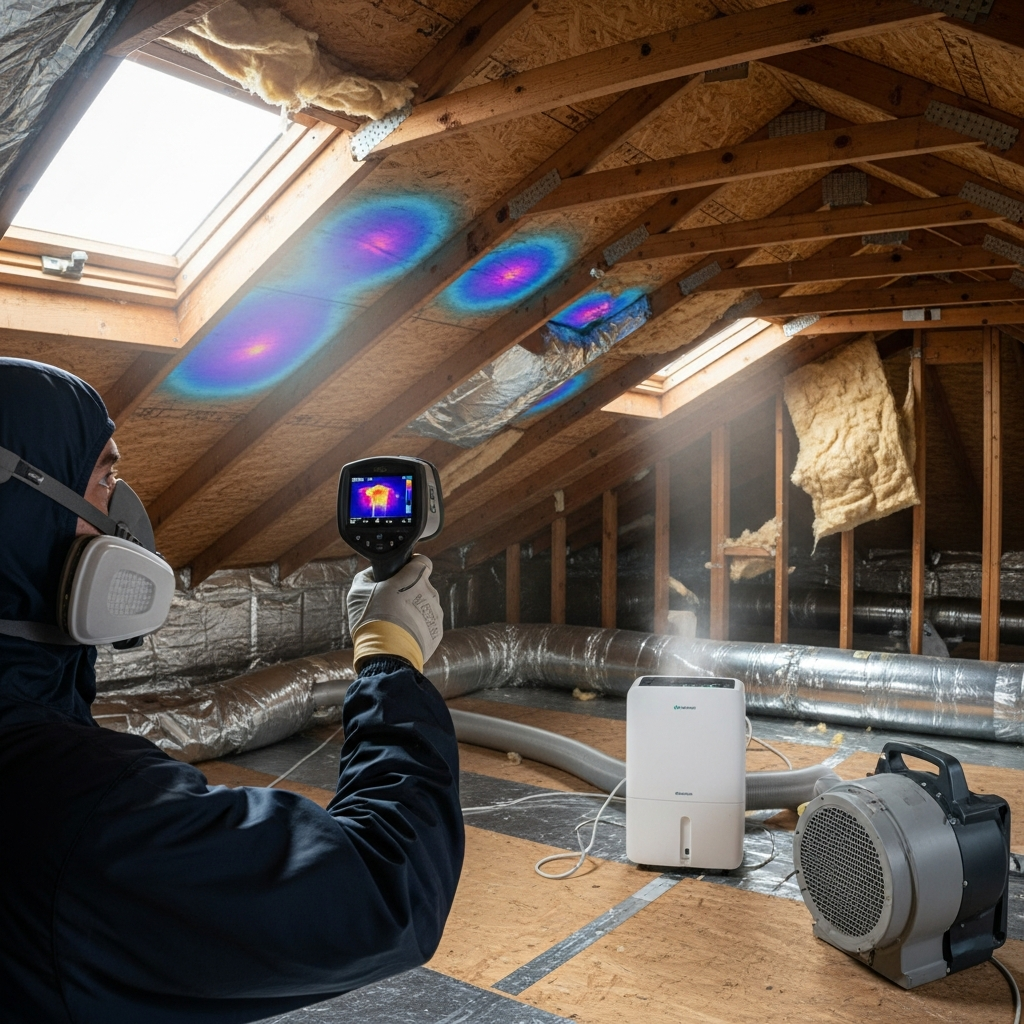
A top-tier assessment pairs visual inspection with moisture mapping. Technicians use pin and pinless meters to compare “suspect” areas to known dry references. Thermal imaging can help pinpoint cold spots that suggest hidden moisture, while hygrometers reveal room-by-room humidity profiles. The assessor documents visible staining, musty odors, and construction details, then traces a likely cause: exterior grading, sump performance, roofing transitions, ventilation gaps, or plumbing leaks.
Homeowners should expect a discussion of containment strategy, work sequence, and occupant safety. A good plan identifies what to remove, what to clean, and what to protect. It explains whether negative air machines will run continuously, how HVAC vents will be sealed in the work zone, and what access paths technicians will use. You should also learn how items like cribs, upholstered furniture, books, and electronics will be handled and protected.
The mitigation process, room by room
Basements often require the most deliberate strategy. After correcting water entry or high humidity, technicians build containment and remove non-salvageable materials such as wet drywall and insulation. Joists and subfloors are cleaned with HEPA vacuuming and careful wiping. Dehumidification stabilizes the environment, and moisture readings are logged until dry standards are reached. The space is then detail-cleaned so spores and dust do not re-seed the rest of the home.
Bathrooms and kitchens focus on ventilation and localized leaks. If moisture has penetrated behind tile or tub surrounds, selective demolition may be needed to access and dry stud bays. Upgrading exhaust fans to properly sized units vented outdoors helps prevent recurrence. In laundry areas, technicians verify that dryer vents discharge outside, not into attics or crawlspaces, which can cause widespread humidity problems.
Attics require balancing air and insulation. In winter, warm household air can rise and condense on cold roof sheathing. A skilled team will check for blocked soffits, disconnected bath fans, and inadequate baffles. They will address any roof leaks and propose air sealing at the attic floor to reduce convective moisture transport. Mitigation then targets surface growth on sheathing and rafters while controlling dust and preventing particles from drifting into living spaces below.
Safety and cleanliness during work
Professional containment is what separates residential mitigation from a messy DIY. Clear barriers with zipper doors, negative air maintained by HEPA filtration, and disciplined debris handling all limit cross-contamination. Technicians should wear appropriate respiratory protection and follow decontamination procedures when exiting the work zone. Homeowners appreciate teams that protect floors and banisters, set consistent schedules, and provide daily progress summaries.
Noise and airflow are part of the process. Air movers and dehumidifiers run continuously during drying, and negative air machines maintain pressure differentials. A reliable contractor will discuss expected sound levels, cord routing, and child- and pet-safety precautions. They also explain how they will handle any surprises, such as discovering past unreported leaks or concealed materials that require additional removal.
Preventing the comeback
Prevention hinges on moisture control and ventilation. Keep indoor relative humidity in a healthy range with dehumidification during sticky months. Make sure bath and kitchen fans vent outdoors and run long enough after showers and cooking. Maintain consistent heating to avoid dew point swings on cold days. Seal and insulate ductwork running through unconditioned spaces. Outdoors, maintain gutters and downspouts, extend leaders, and grade soil to move water away from the foundation.
Regular monitoring is your ally. Keep an eye on window condensation, especially on colder mornings. Inspect under sinks and around appliances for slow drips. After heavy rain or snowmelt, check basements for damp spots, staining, or musty odors. Early action limits the scope of work if mitigation becomes necessary, saving time and preserving finishes.
Choosing the right residential contractor
Look for a team that emphasizes building science, not just surface cleaning. Ask for a written protocol describing moisture source correction, containment design, selective demolition, cleaning methods, drying equipment, and verification. Request photos from similar Bloomfield homes and references you can contact. Transparency in planning and reporting is a strong predictor of a smooth project and lasting results.
Communication style also matters. You want a contractor who explains each step clearly, coordinates with your family’s schedule, and treats your home respectfully. If you are comparing providers, review how each one guards clean rooms, protects contents, and documents moisture readings. During your mid-project research, it can be helpful to look at how established teams present their approach to professional mold mitigation services, including containment and verification practices that align with your home’s layout.
What documentation you should receive
A thorough closeout package may include before-and-after photos, moisture maps, drying logs, and a summary of the steps taken to remediate and prevent recurrence. If an independent assessment was performed, the report might also include lab results or clearance criteria. Even when third-party testing is not used, the contractor’s documentation should clearly show what was wet, what was removed or cleaned, and how moisture was controlled before demobilization.
Life after mitigation: keeping a healthy home
Once the project is complete, focus on stable ventilation and humidity. Consider installing timer switches or humidity-sensing controls for bathroom fans. In basements, operate standalone dehumidifiers as needed, ensuring continuous drainage to a floor drain or condensate pump. Periodically inspect exterior caulking and flashing. Inside, maintain consistent temperatures and avoid blocking supply and return vents with furniture or drapery.
If you plan renovations, integrate moisture-smart details: continuous exhaust ducting to the exterior, backdraft dampers, proper attic air sealing and insulation, and durable, water-smart materials in bathrooms and laundry rooms. Planning these elements up front helps you preserve the gains achieved during mitigation.
Frequently Asked Questions
Q: Do I need to leave my home during mitigation? A: It depends on the scope and layout. Many families remain in place while work zones are contained and negative pressure is maintained. Sensitive individuals may prefer temporary relocation until demolition and heavy cleaning are complete.
Q: Is testing required? A: Not always. A strong visual and moisture assessment often provides enough information to proceed. In more complex or sensitive cases, third-party testing and clearance can provide extra assurance.
Q: How do you protect children and pets? A: Contractors should isolate work areas, secure cords and equipment, and maintain clean egress paths. Clear communication about schedules and off-limits zones keeps everyone safe.
Q: What about my furniture and keepsakes? A: Teams assess items individually. Non-porous belongings can often be cleaned. Heavily affected porous items may need to be discarded. The goal is to protect what matters most while preventing cross-contamination.
Q: Can mold reappear after the job? A: If moisture returns, so can mold. The solution is long-term moisture control—ventilation, drainage, and humidity management—paired with periodic inspections.
Q: Are attics a frequent trouble spot in Bloomfield? A: Yes. Blocked soffits, under-ventilated roof assemblies, and disconnected bath fans are common. Air sealing and proper venting reduce condensation on cold sheathing during winter.
Move forward with confidence
When mold threatens your comfort, clarity and action restore control. Start with a comprehensive assessment, insist on strong containment and documentation, and follow through with prevention steps. A thoughtful, well-communicated plan protects your family’s health and your home’s value. For homeowners who want prompt guidance and dependable results, connect with specialists in mold mitigation services and take the next step toward a cleaner, drier, healthier Bloomfield home.