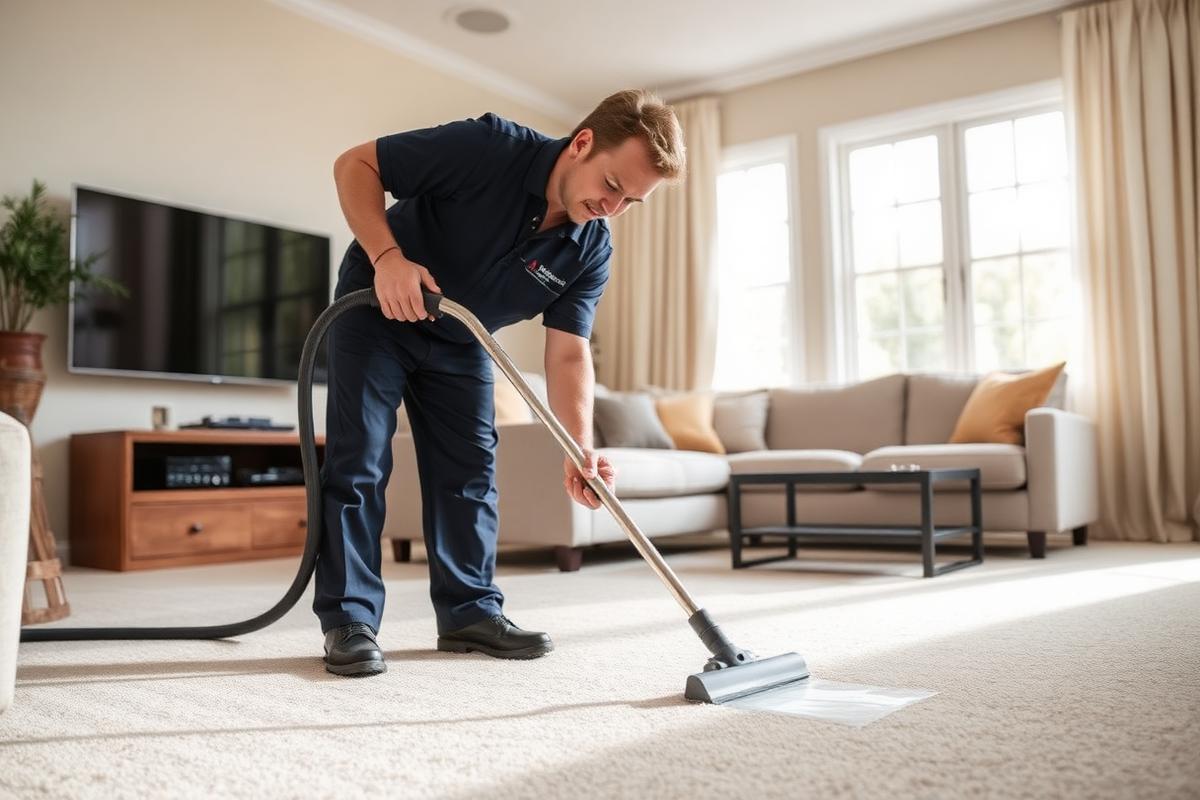
Carpet gets blamed for allergies, but it acts more like a filter — it holds particulate out of the breathing zone until something disturbs it. The problem is not the carpet, it is a filter that never gets cleaned.
What is in the pile in July
Tree and grass pollen tracked in on shoes and pets, dust mite allergen concentrated in the base of the pile, pet dander, and skin cells that feed the mites.
Vacuuming removes surface debris. Dust mite allergen and pollen bound in the lower pile need hot water and extraction to come out.
How to get the allergen benefit
Slow, overlapping vacuum passes with a HEPA-filtered machine twice a week in traffic areas, professional hot-water extraction every 6-12 months, and walk-off mats at every entry.
Ask for a rinse-only final pass, no residue-heavy shampoos. Detergent residue attracts soil and can irritate sensitive occupants.
Pair it with the rest of the system
Carpet cleaning helps most when it happens alongside upholstery cleaning and HVAC filtration — those three share the same particulate load and re-contaminate each other.
Change HVAC filters on schedule during cooling season; a loaded filter undoes a lot of good floor care.
Key takeaways
- Vacuuming misses the allergen bound in the lower pile
- Request a low-residue, rinse-focused cleaning
- Treat carpet, upholstery and HVAC filtration as one system
Need carpet cleaning in Northeastern New Jersey?
Truck-mounted hot-water extraction removes deep dirt, allergens, and stubborn stains — safe for children, pets, and delicate fibers.
More from week 3: Indoor air quality
Allergens, filtration and the systems that decide what you breathe at home.
- Air Duct CleaningDuct Cleaning, Filters and Summer Allergies: What Actually Helps
- Restoration ServicesBuilding Back Healthier: Restoration Choices That Improve Air Quality
- Area Rug CleaningThe Dusting Step: Why Rug Cleaning Removes More Allergen Than You Think
- Upholstery CleaningDust Mites and Pet Dander: Why Upholstery Cleaning Matters for Allergies