Back to Water Damage Restoration

Services

Flood cleanup

Surface and river water is category 3, and category 3 decides what stays.

5.0 from 168 Google reviews 24 hours, by appointment

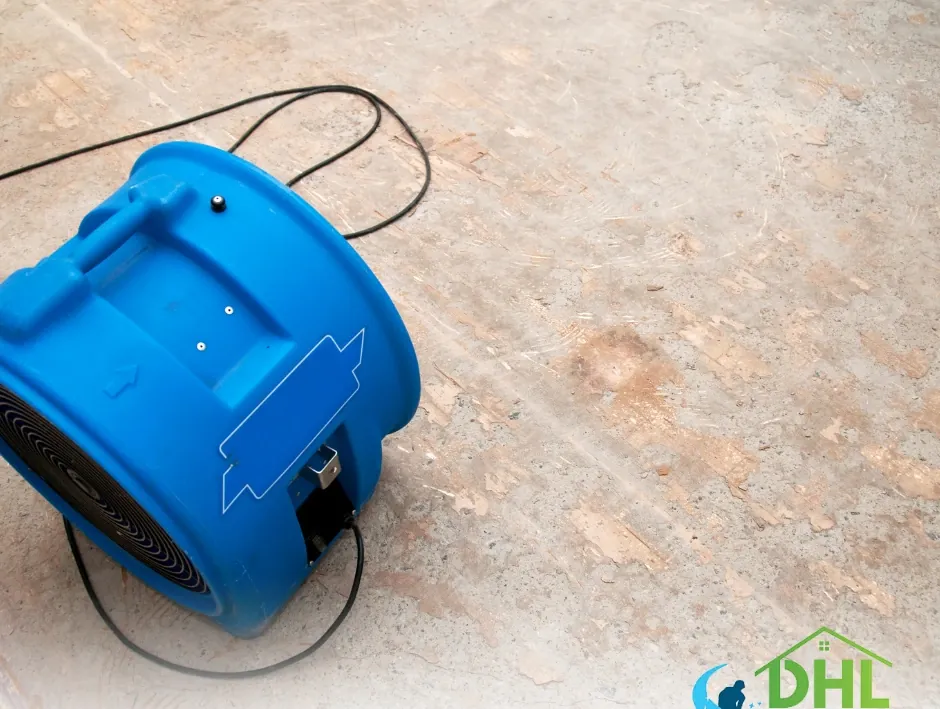
A blue air mover standing on a water stained plywood subfloor after the floor covering was taken up.

reference photograph, not one of our jobs

Photo pending

Sheet 01H, Water Damage Restoration

Scope

What this covers

Flood water is category 3 under the S500 standard without qualification, because water that has run across ground or come out of a river carries soil, sewage, fuel and whatever else it crossed on the way. That single fact governs the whole job. Porous materials the water touched are removed rather than dried, the structure is cleaned before it is dried, and the drying is the last part of the job.

  • Standing water and silt removed from the affected levels
  • Category 3 assessment and the protective measures that category requires
  • Porous material the water touched removed and discarded, cut back above the flood line
  • Structure cleaned and treated before any drying equipment is placed
  • Drying of framing, masonry and slab back to a measured dry standard
  • Full documentation of the flood line, the removals and the daily readings

Detail

Why flood water is category 3

Category 3 is not a judgement about how dirty the water looks. It is a classification of where the water has been.

The standard treats ground and surface water as grossly contaminated because of what it necessarily contacts on the way in. A flood crosses roads, lawns, driveways and often a surcharged storm or sanitary system before it reaches a house. Porous materials hold what is in that water inside their structure, and drying removes the water without removing the contamination, which is why removal rather than drying is the rule.

Flood Cleanup Drawn from the standard. This is a drawing and no reading on it is live. Tide line

Drawn from the standard. This is a drawing and no reading on it is live. Flood water that crossed ground or came from a river is category 3, the most contaminated class.

What the water carried in
Soil and silt, which settle out onto every horizontal surface as the water drops.
Sewage from surcharged municipal lines mixing with surface water.
Fuel, oil and lawn chemicals picked up from roads, driveways and gardens.
What that means inside
Porous material the water touched is removed and discarded, not dried.
The structure is cleaned and treated before any drying equipment is placed.

Common questions

What people want to know before booking

Can I go back in the building?

Not until the power is confirmed off at the panel and the water has stopped rising. Flood water reaches outlets, cords and appliances, and it hides everything on the floor including anything sharp and anything that floated. Where a building took water above the outlets, an electrician sees it before anybody works in it.

How much has to come out?

Everything porous that the water touched, cut back above the flood line rather than at it. Drywall, insulation, carpet, pad, particle board and upholstered furniture all go in a flood. Framing, masonry, metal, hard plastic and sealed goods usually stay and are cleaned. The removal list is photographed and logged as it is made.

Is this covered by my homeowners policy?

Almost certainly not. Flood is excluded from nearly every standard homeowners policy and is covered separately under a National Flood Insurance Program policy. The loss is documented to the same standard either way, and the documentation is what any carrier or program adjuster will read.

How long does a flood job take?

Longer than a clean water loss of the same size, and the daily log is what tells you where it stands rather than a promise on day one. The removal and cleaning happen before drying starts, and masonry and slab release water slowly, so the readings on a flooded lower level close later than they would upstairs.

The method

What comes out after a flood

The removal list is decided by porosity and by the flood line. Drywall is cut back to a clean edge above the highest reading, not above the visible line, because the paper face wicks water upward well past where the mark stops. The insulation behind it comes out with it. Carpet and pad go. Particle board and medium density fiberboard swell and lose strength and do not come back.

Contents follow the same rule. Upholstered furniture, mattresses, cardboard, paper, books and anything with a porous surface that sat in flood water are not salvaged. Hard plastic, metal, glass, sealed goods and solid wood furniture with an intact finish are cleaned and kept. Where an item has real value, sentimental or financial, it gets an assessment rather than an automatic answer, and you are told plainly what the risk is.

Everything removed is photographed in place first, measured and logged against the category that required it. In a flood that list is long, and a long list without a record behind it is the thing an adjuster will not accept.

Cleaning comes before drying

In a clean water loss the sequence is extract, then dry. In a category 3 loss there is a step in between, and skipping it is the most common way a flood job goes wrong. Silt and residue settle onto every horizontal surface as the water drops, and running air movers over that residue puts it into the air of the building and into every room the air reaches.

So the order is extraction, then removal of the porous material, then cleaning and treatment of the remaining structure, and only then drying equipment. Surfaces are cleaned physically instead of being sprayed and left, because an antimicrobial applied over silt treats the silt rather than the surface under it.

Where the flood reached ductwork or an air handler, the system is not run until it has been dealt with, because an HVAC system that took flood water distributes what is in it to every room in the building the moment it is switched on.

Drying a building that took surface water

What is left after a flood removal is mostly framing, masonry and slab, and all three release water slowly. Concrete and block are class 4 materials and they hold water in their surface layer for a long time, so the drying plan uses dehumidification with the capacity to hold a dry enough condition in the space along with heat, because a cold masonry surface releases almost nothing.

Framing lumber usually survives, and it is read individually rather than assessed by eye. A bottom plate sitting on a wet slab is the last thing in the assembly to reach the dry standard and it is one of the fixed monitoring points for that reason. Nothing is rebuilt over it until it reads.

The timeline follows from the material rather than from a promise. A lower level stripped back to framing and masonry is drying dense material that gives water up slowly, and the daily log is what tells you where it stands.

The flood insurance line, stated plainly

Flood is excluded from almost every standard homeowners policy. It is covered separately under a National Flood Insurance Program policy, and a homeowner who does not carry one generally has no cover for a flood loss, whatever their homeowners policy pays for other kinds of water.

That distinction catches people out because the water on the floor looks identical. A river that came up into a basement and a supply line that burst in the same basement produce the same puddle and two entirely different insurance conversations. It is worth knowing which policy you hold before the weather makes it urgent.

The loss is documented the same way in either case: photographs from before anything moved, the flood line recorded, a category and class assignment, an inventory of removals with the reason for each, and a daily reading log through the drying, so you have a complete file to give your insurer. We do not file, adjust or negotiate the claim.

Before you call

Frequently asked questions

Question 1: Can anything that sat in flood water be saved?

Non porous items, yes. Metal, glass, hard plastic, sealed goods and solid wood with an intact finish are cleaned and kept. Porous items are not salvaged, because the contamination sits inside the material and drying removes the water without removing what came with it. That rule is what category 3 means in practice.

Question 2: How high do you cut the drywall?

Above the highest meter reading rather than above the visible flood line, and usually to a convenient height that makes the rebuild straightforward. Drywall wicks water upward through its paper face well past the mark the water left, so cutting at the line leaves wet board in the wall.

Question 3: Do I need to move out?

For a flood that reached a living level, usually yes, at least while the removal and cleaning happen. For a flood confined to an unfinished lower level, often not. It is discussed on the first visit with the actual scope in front of you rather than decided in advance.

Question 4: Is a flooded basement the same as a flood?

Not always, and the difference matters for insurance. Water that came in from outside, from the ground or from a rising river is flood. A burst pipe or a failed water heater in the same basement is not, and is normally covered as sudden and accidental water damage. The basement page covers the below grade case in full.

Question 5: Will mold grow after a flood?

It will if the building is not dried in time. The EPA guidance is that water damaged areas and items should be dried within 24 to 48 hours to prevent mold growth, and a flood is the hardest case to meet that in because the removal and cleaning come first. Where growth has already started when we arrive, the work moves to the mold standard rather than being dried through.

Customer reviews

5.0 from 168 Google reviews, opens in a new tab
“DHL Carpet & Water Damage Restoration saved the day! They responded quickly to my emergency, were professional and courteous, and their work was top-notch.”
Priscila Agrusa · · 5 stars on Google,

“I was impressed by DHL's prompt service and expertise. They efficiently handled my water damage issue, and the results were excellent. Great communication throughout the process!”

Viviana Gil · ·

“We had an unexpected shower leak due to an incorrect installation by the previous owners. The team arrived the SAME DAY to diagnose the issue, and within 24 hours, the repair crew was on-site to resolve the problem.”

Kaiden Braxton · ·

Read them all on Google, opens in a new tab

Coverage

Where we do this

We cover six counties across North and Central New Jersey. All services are performed at your home or business.

Towns we cover

Estimate request

Tell us what needs cleaning

Tell us the rooms, the surfaces and the address, and attach a photograph of the affected area if you have one. You receive a written estimate before any work begins, with no obligation.

Written estimate, no obligation Answered any hour at (908) 520-8698 5.0 from 168 Google reviews EPA-registered products, safe for pets and children

Written estimate

NO. 0168
A written estimate before any work begins, with no obligation.
Please enter your name.
Enter a 10 digit phone number.
Enter a valid email, or leave it empty.
Enter the street address.
Enter the town.
Enter the 5 digit ZIP.
What needs cleaning? (pick at least one)
Pick at least one surface.
Photographs of the area (optional, up to 5, 8 MB each)

A photograph of the area helps us give an accurate estimate.

    The estimate is free and there is no obligation.

    NORTH JERSEY · N.J. ESTIMATE · IN WRITING RECEIVED NO. 0168

    Request received.

    Your written estimate comes back from the technicians who do the work. For anything urgent, call (908) 520-8698.

    Get my estimate