Extract before you evaporate
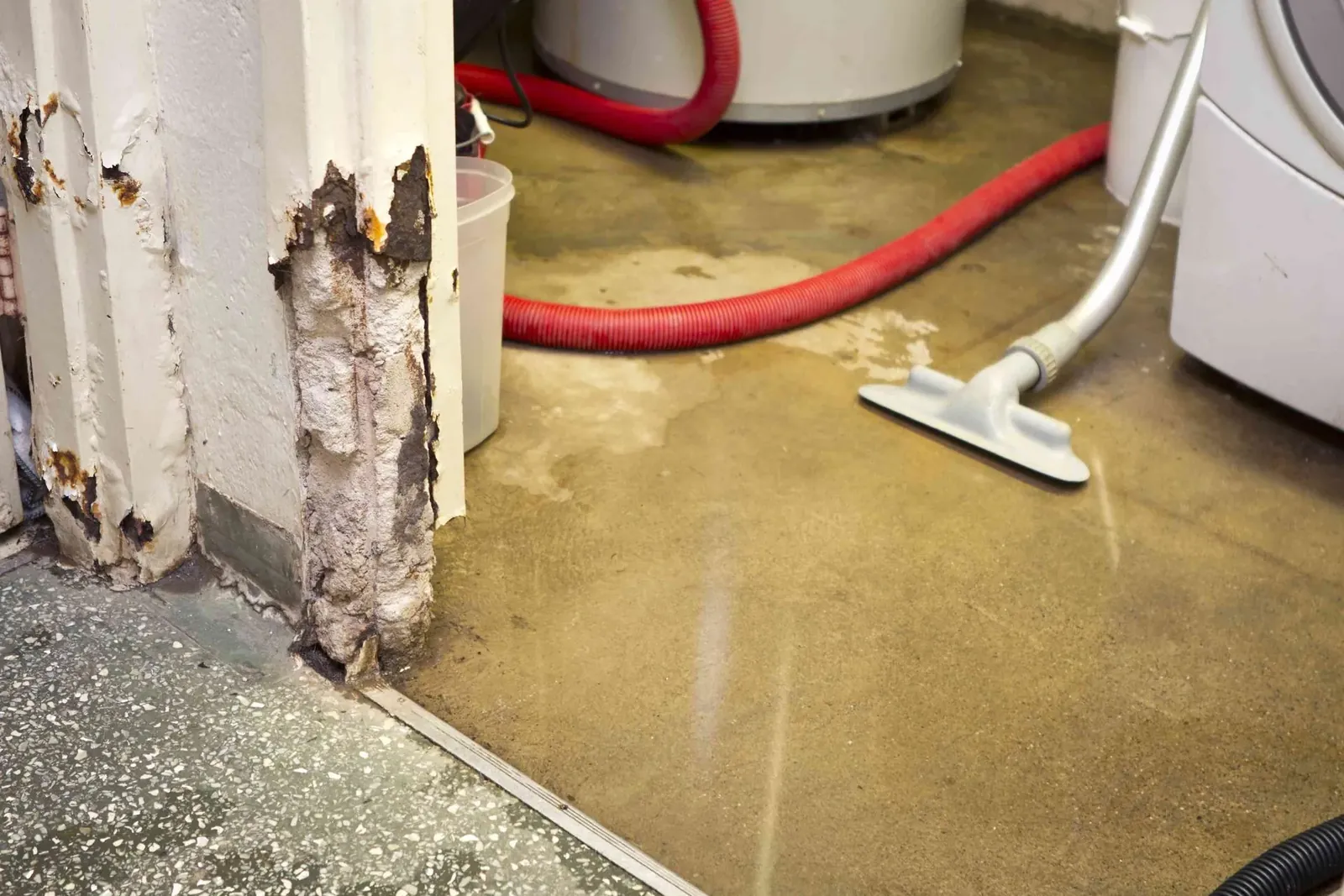
The order is arithmetic. A gallon of liquid water sitting in a carpet pad can be pulled out with a machine in a few passes. The same gallon left in place has to evaporate into the room air and then be condensed back out by a dehumidifier, which takes hours of machine runtime and puts every one of those hours of vapor in contact with the walls, the ceiling and the contents.
That is why a room full of air movers over a saturated carpet is a mistake rather than a fast start. Air movement across standing water raises the room humidity faster than the dehumidification can lower it, and the excess vapor goes into the drywall, the trim and the framing, which then need drying too. The room looks busy and the job gets longer.
Extraction is finished when the readings stop improving with another pass. At that point what remains is bound water inside the material, and bound water is what drying equipment exists to remove.
Carpet, pad and hard floors take different tools
Carpet releases water under weight. A weighted extraction tool presses the carpet and pad together against the subfloor and pulls the water up through the face, and a self propelled version does the same thing with more consistent pressure over a large area. The number of passes is decided by the meter rather than by the look of the carpet.
Pad is the hard part. Open cell foam pad holds several times its weight in water and gives it up slowly under compression. In a clean water loss caught quickly, pad is often extracted and dried in place with air forced under the carpet. In a gray water loss the pad comes out, because what is in the water is held in the foam and drying it leaves the contamination behind.
Hard floors hold their water at the seams and underneath. Water on a tile floor is removed from the surface and then pulled from the grout lines, and water that has gone under a plank or a sheet floor is reached from the edges or by removing a section, because water trapped under a vinyl sheet floor will not evaporate through it at any useful rate.
Cavities, toe kicks and the places water hides
Water travels sideways and upwards through materials by capillary action, so the wet area on the meter is always larger than the wet area to the eye. It runs under the edge of a base cabinet into the toe kick space, where there is no air movement and no light, and it wicks up the paper face of drywall well above the water line.
Where a cavity is holding water, the assembly is opened rather than dried through. That may be a row of small holes behind the base trim to move air into a wall cavity, a removed section of base trim, or a cut line above the wet zone in the drywall. Every opening is photographed before it is made and recorded with the reading that justified it.
The alternative to opening an assembly is drying its outside face while the inside stays wet, which produces a surface that reads dry, a wall that fails a reading two weeks later and, often enough, a mold call three months later.
When extraction is not the answer
Some material is removed instead of extracted. Saturated insulation holds water and loses its function, and it is taken out rather than dried. Particle board and medium density fiberboard swell and lose structural integrity once wet, and neither recovers. Carpet pad in a category 2 or category 3 loss comes out.
In a category 3 loss the whole approach changes. Porous materials exposed to black water are removed and discarded, and the extraction that does happen is about getting the water out of the building safely rather than about saving the material it came out of.
Everything removed is photographed in place first, measured, and logged with the category that required it. That record is what makes a removal decision legible to an adjuster who was not in the room.